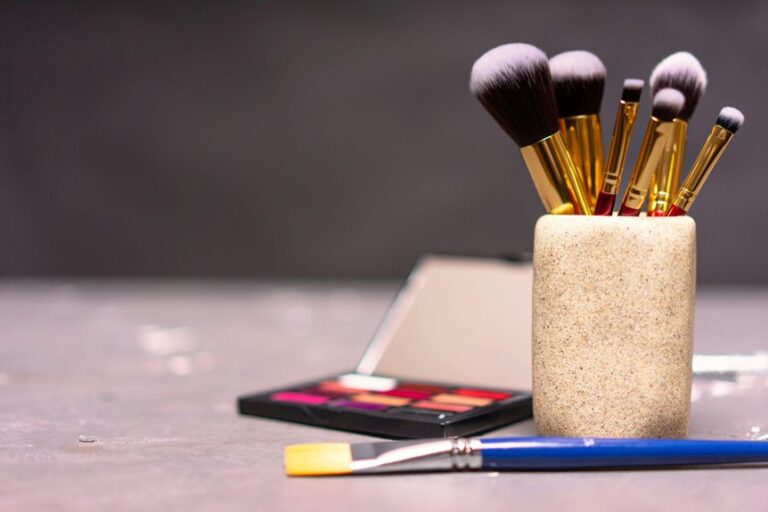
Makeup is a structured mixture of water, oils, waxes, pigments, emulsifiers, and functional additives. Each component serves a specific role, from color delivery and texture control to spreadability and shelf stability. Foundation, lipstick, mascara, and eyeshadow rely on different combinations of these materials to achieve their distinct effects. The composition is more complex than it initially appears, and the details determine how each product performs.
What Makeup Is Made Of
Makeup is typically formulated from a mixture of base liquids, structural agents, colorants, and performance additives.
In makeup formulation basics, the matrix often includes water or light oils, while thickeners and emulsifiers control texture and stability.
Cosmetic ingredient sourcing determines whether mineral, synthetic, or botanical inputs are selected for consistency, safety, and sensory performance.
Pigments and optical agents provide coverage, tone, and visual modification, whereas preservatives maintain product integrity during storage and use.
Additives could improve spreadability, adhesion, moisture balance, or film formation, depending on the product type.
This composition allows cosmetics to function as engineered systems rather than simple colored creams, supporting familiar routines and shared standards within a community of users seeking reliable, well-characterized results.
Key Makeup Ingredients And Their Roles
Pigments and colorants provide the visible chromatic properties of makeup, with compounds such as iron oxides, titanium dioxide, and mica determining hue, opacity, and shimmer.
Binders and emollients maintain film integrity and product cohesion while improving spreadability, texture, and skin feel.
Together, these ingredient classes define both the aesthetic performance and the physical stability of cosmetic formulations.
Pigments And Colorants
Colorants determine the visible character of cosmetic products through providing hue, opacity, and optical effects. In pigment systems, iron oxides set color intensity and shade stability, while titanium dioxide increases coverage and pearlescence. Mica contributes controlled shimmer without masking adjacent tones, supporting a cohesive finish for many users.
| Colorant | Primary function |
|---|---|
| Iron oxides | Broad hue control |
| Titanium dioxide | Opacity enhancement |
| Mica | Shimmer and light scattering |
FD&C dyes, identified by codes such as C.I. 19140, offer strong chromatic response at low loadings. Inorganic pigments are frequently selected for mineral foundations because their particle chemistry can suit sensitive skin and maintain visual consistency across batches. Together, these materials define the shared language of makeup shades.
Binders And Emollients
Beyond hue and opacity, cosmetic performance depends on binders and emollients that control cohesion, spreadability, and skin feel. Binders such as waxes, polymers, and film formers anchor pigment particles to the formula and to the skin, improving binder performance during application and wear.
Emollients, including mineral oil, silicones, castor oil, and caprylic/capric triglyceride, reduce friction, soften texture, and improve glide. The resulting emollient balance determines whether a product feels heavy, silky, or dry.
In lipsticks, binders preserve shape while emollients prevent brittleness; in foundations, they help disperse color evenly and reduce cakiness. Proper selection supports stability, adhesion, and a familiar, comfortable finish that lets users feel included in a polished, professional result.
Foundation Ingredients For Coverage And Blend
Foundation performance depends on a balanced base of water, emulsifiers, thickeners, and emollients that control texture, stability, and spreadability.
Water acts as the main solvent, while emulsifiers such as polysorbates keep oil and water phases unified. Thickeners like xanthan gum and cetyl alcohol increase viscosity, helping pigment dispersion remain even. Mineral oil and silicones, especially dimethicone, reduce drag and improve glide across skin.
Iron oxides and titanium dioxide supply coverage balance by adjusting color depth and opacity, and mica can soften the finish. In mineral formulas, zinc oxide can add gentle coverage for sensitive skin.
Together, these components support blend comfort, a smooth laydown, and a finish that feels consistent, familiar, and easy to wear within a shared makeup routine.
Lipstick Ingredients For Color And Shine
Lipstick formulations rely on a distinct balance of pigments, waxes, and emollients to deliver color, structure, and sheen. Iron oxides and FD&C dyes supply the chromatic range, while titanium dioxide increases opacity and can soften the final tone. Beeswax and carnauba wax create a stable matrix that helps the product hold its shape during wear.
Castor oil, mineral oil, and shea butter contribute glide, reduce drag, and support comfort for users seeking a polished, confident appearance. Mica and selected silicone compounds function as lipstick shine boosters, improving light reflection without excessive greasiness. Preservatives maintain product integrity over time.
Together, these components determine lip color finish, from matte to glossy, allowing each wearer to find a formulation that feels precise, reliable, and visually cohesive.
Mascara Ingredients For Length And Volume
Mascara formulated for length and volume commonly incorporates fiber additives that adhere to lash surfaces and increase apparent extension. Thickening waxes contribute bulk, film integrity, and mechanical support to the coating layer. Lengthening polymers form flexible matrices that improve adhesion, separation, and uniform deposit across individual lashes.
Fiber Additives
Fiber additives are incorporated into mascara formulas to increase apparent lash length and volume through depositing fine particles that adhere to the lash surface. These materials typically consist of cellulose, nylon, rayon, or polyester fragments selected for controlled size and surface chemistry.
Through providing fiber reinforcement, they create a denser optical profile that makes lashes appear extended and more numerous. Synthetic texture boosters assist dispersion within the base, reducing clumping and supporting uniform transfer from brush to lash.
Their performance depends on particle geometry, charge, and compatibility with film-forming agents. In well-designed products, the fibers align with application direction, helping users achieve a cohesive finish that feels familiar and refined. Such systems are valued for precision, consistency, and visible enhancement without heavy structure.
Thickening Waxes
Among mascara structure agents, thickening waxes such as beeswax, carnauba, and synthetic waxes increase body, viscosity, and film stability while supporting the buildup needed for length and volume.
Their crystalline network creates a wax structure that suspends pigments evenly and reduces separation during storage.
In application, this matrix raises resistance to flow, so lashes receive a denser coating with each pass.
Beeswax contributes pliability, carnauba adds hardness and higher melting point, and synthetic waxes can refine formula texture for smoother glide.
Together, they help mascara adhere uniformly, dry into a coherent layer, and maintain shape without excessive crumbling.
For consumers seeking reliable performance, these agents define the product’s mechanical feel and contribute to a consistent, community-approved finish across daily use.
Lengthening Polymers
Lengthening polymers in mascara are film-forming ingredients that extend the product along the lash shaft, improve adhesion, and help create a smoother, more elongated appearance.
These film forming polymers function as lash coating agents, depositing a flexible layer that can resist flaking while maintaining separation. Their performance depends on polymer weight, solubility, and drying rate.
- They increase visible lash length while stretching the cosmetic film.
- They support volume while building uniform thickness around each fiber.
- They promote wear while anchoring pigments and waxes to the lash surface.
In formulations designed for a refined, cohesive look, these polymers help users feel included in the same polished result. Proper balance with water, waxes, and pigments is essential for controlled application and consistent finish.
Eyeshadow Ingredients For Pigment And Texture
Eyeshadows derive their pigment and texture from a blend of colorants, fillers, binders, and surface-modifying agents designed to produce controlled payoff and adherence. Iron oxides supply stable hue, while titanium dioxide increases opacity and can intensify pearlescence. Mica contributes slip and light diffusion, supporting shimmer balance without excessive sparkle. Talc and related powders act as fillers, improving pressability, reducing drag, and helping each pan feel familiar in use.
Silicones and lightweight binders promote adhesion to the lid, aiding crease control during wear. Emollient oils and waxes soften the matrix, adjusting texture from velvety matte to satin. Fine particle size, surface coating, and binder ratio determine blendability, color release, and the cohesive finish valued via users seeking polished, shared beauty standards.
Why Makeup Needs Preservatives
Makeup requires preservatives because its water, oils, and plant-derived components can support microbial growth once the package is opened and exposed to air, fingers, and applicators. Preservatives limit microbial contamination and maintain shelf life safety through suppressing bacteria, yeast, and mold in shared routines. In practical terms, they help users stay confident in products that travel from vanity to bag and back again.
- Water-rich formulas need stronger protection.
- Creams and liquid products face higher exposure during repeated use.
- Stable preservation reduces odor, texture change, and spoilage.
Common systems include phenoxyethanol, parabens, and organic acids, selected to balance efficacy with formula performance. Together, these agents preserve usability, helping makeup remain dependable, hygienic, and familiar for the community that relies on it daily.
How Natural And Synthetic Ingredients Differ
Natural and synthetic ingredients differ primarily in origin, molecular consistency, and functional control within cosmetic formulations.
Natural materials are derived from plants, minerals, or animal sources, such as aloe vera, beeswax, mica, and oils, while synthetic materials are manufactured to reproduce or enhance similar functions with tighter specifications.
In practice, both can support safe, effective makeup when selected with rigor.
Natural ingredient profiles may appeal to audiences seeking clean ingredient sourcing and familiar botanical identity, yet their composition can vary with harvest conditions.
Synthetic alternatives often improve stability, texture, and color uniformity, though they introduce formulation performance tradeoffs that teams evaluate carefully.
The strongest products usually blend both classes, balancing sensory performance, compatibility, and consumer trust.
How To Read Makeup Labels
Decoding a makeup label begins with the ingredient list, which is typically ordered according to concentration from highest to lowest, making the earliest entries the dominant components of the formula. Expertise of ingredient order basics helps users identify water, silicones, or oils as structural foundations.
- Inspect the initial five ingredients for solvent, emollient, or pigment dominance.
- Check for preservatives such as phenoxyethanol and stabilizers that affect safety.
- Practice spotting concealed fragrance names, including parfum, aroma, and botanical extracts.
Percentages below 1% might appear in any sequence, so late-list ingredients can still matter biologically. Comparative reading of labels cultivates informed belonging in communities that value evidence-based cosmetics selection, particularly while evaluating talc, mica, titanium dioxide, or sensitizing dyes in mineral and color products.
Frequently Asked Questions
Why Do Some Makeup Products Feel Heavy on Skin?
Some makeup feels heavy because higher texture density and emollient load increase film thickness, reduce slip, and limit breathability. Dense pigments, waxes, and silicones can intensify occlusion, leaving skin less light and more coated.
Which Ingredients Help Makeup Last Through Humidity?
Humidity defying makeup relies on silicone film formers and humidity blocking polymers, creating an invisible shield. These ingredients reduce smudging, improve wear, and help formulas stay intact, even if air feels heavy and damp.
How Do Makeup Pigments Affect Skin Sensitivity?
Makeup pigments can trigger pigment allergy or irritation whenever sensitive skin reacts to certain colorants. Low colorant absorption generally limits systemic exposure. Mineral pigments such as zinc oxide or iron oxides are often better tolerated.
What Makes One Product More Water-Resistant Than Another?
Greater water resistance comes from stronger film formers and silicone polymers which create hydrophobic barriers that repel moisture. Waxes, resins, and less water soluble pigments also help products cling, enhancing endurance through humidity and contact.
Can Makeup Ingredients Vary by Country Regulations?
Yes, makeup ingredients can vary across countries because regulations differ on ingredient restrictions and labeling requirements. Formulators adjust preservatives, colorants, and UV filters to satisfy local rules, ensuring compliant products and consumer trust.