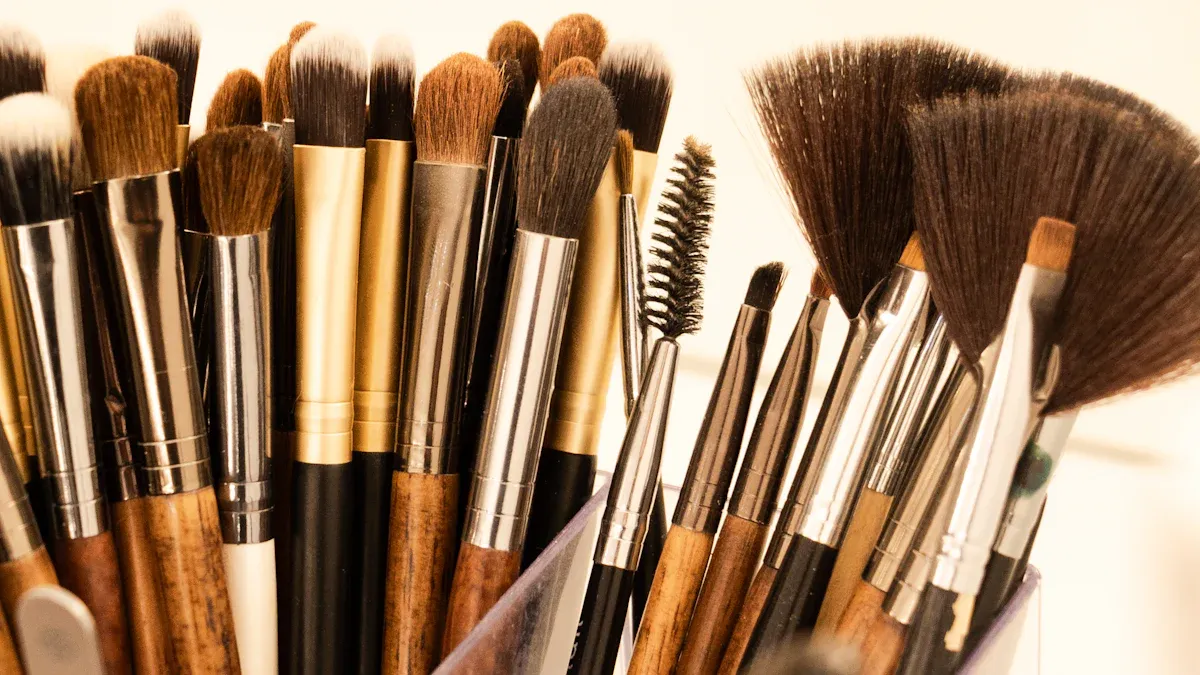
Makeup brushes play a crucial role in your makeup routine, and our Makeup Brushes Guide can help you navigate this essential tool. They help you achieve a flawless application and enhance your overall look. With a wide variety of brushes available, each one serves a specific purpose. For instance, stippling brushes work wonders for cream foundations, while blending brushes help merge shades seamlessly. You’ll find that using the right makeup brushes, as outlined in our Makeup Brushes Guide, can elevate your skills and provide professional results.
Key Takeaways
Choosing the right makeup brushes is essential for achieving a flawless look. Each brush serves a specific purpose, enhancing your application skills.
Invest in a basic set of brushes, including a foundation brush, powder brush, blush brush, and eyeshadow brush. These tools are crucial for beginners.
Regularly clean your brushes to maintain hygiene and performance. Clean brushes prevent bacteria buildup and ensure smooth application.
Store brushes upright in a ventilated holder to keep them in good shape. Proper storage prolongs their lifespan and effectiveness.
Replace brushes every two years or sooner if you notice signs of wear. This ensures optimal performance and a flawless makeup finish.
Makeup Brush Types
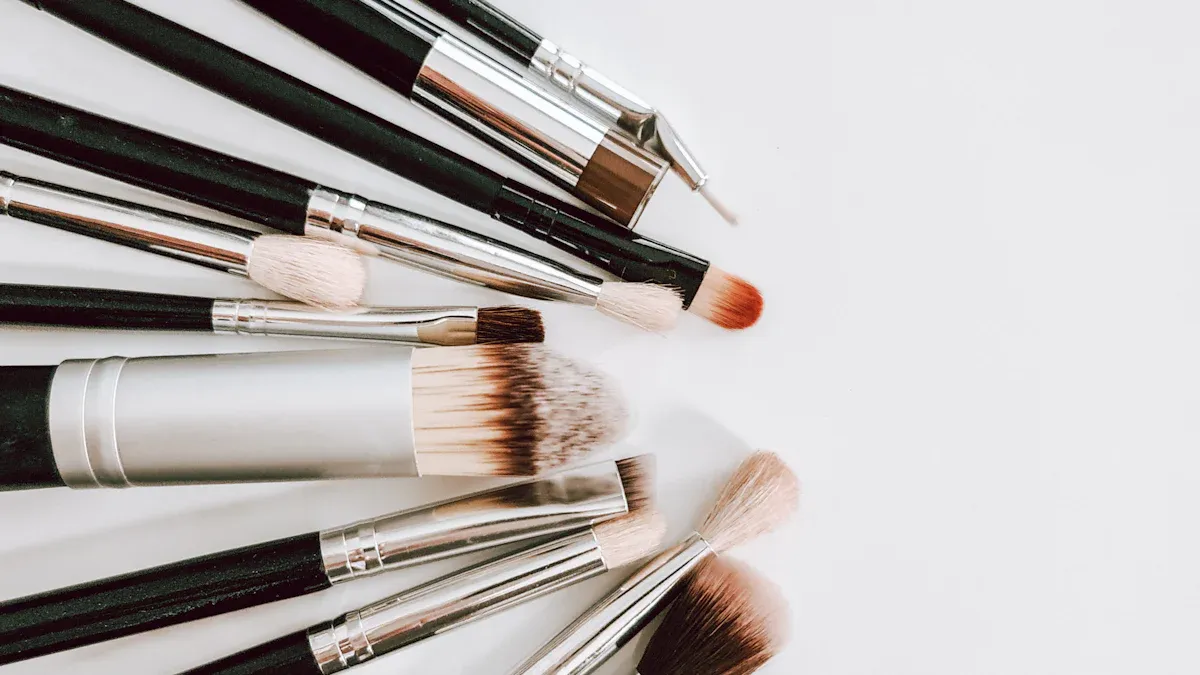
Face Brushes
Face brushes come in various shapes and sizes, each designed for specific applications. Here’s a breakdown of essential face brushes:
Brush Category | Uses | Why It Works |
|---|---|---|
Foundation Brushes | Ideal for buffing liquid or cream foundation for a flawless finish. | Densely packed round shape ensures even distribution and avoids streakiness. |
Blush and Bronzer Brushes | Great for applying blush or bronzer, allowing gradual color build-up. | Round shape helps in blending products smoothly into the skin. |
Flat Brushes | Used for precise application, especially in hard-to-reach areas. | Flat design allows for controlled application and even product placement. |
Angled Brushes | Perfect for defining and contouring along natural curves. | Angled edges provide better control for precise application. |
For beginners, a few essential brushes can help you achieve a flawless complexion. Consider these:
Brush Name | Description |
|---|---|
F1 – Foundation Brush | Densely packed bristles blend liquid and cream products effortlessly for a skin-like finish. |
F3 – Cheek Brush | The perfect shape to apply blush or bronzer with control and a diffused, natural payoff. |
F5 – Powder Brush | A tapered powder brush designed for controlled, even application of all powder products. |
Eye Brushes
Eye brushes are crucial for creating stunning eye makeup looks. Each brush serves a unique purpose:
Blending Brush: Soft and fluffy, perfect for transition shades and diffusing harsh lines.
Crease Brush: Tapered tip for placing deeper tones in the eye socket.
Flat Shader Brush: Dense brush for packing shimmer or matte shadow onto the lid.
For beginners, mastering basic eye makeup techniques starts with these brushes:
Eyeshadow Brush: Essential for applying eyeshadow across the eyelid.
Blending Brush: Key for softening lines and creating seamless transitions.
Brow Brush: Helps fill in brows and can double as an eyeliner tool.
Lip Brushes
Lip brushes enhance your lip product application. Here are some types to consider:
Type of Lip Brush | Description |
|---|---|
Retractable Lip Brushes | Ideal for travel, these brushes have a casing to protect the bristles. |
Fixed Handle Lip Brushes | Provide a stable grip, commonly used at home or in salons. |
Dual-End Lip Brushes | Offer versatility with two brush types for lining and filling. |
For precise lip lining and blending, consider these effective options:
Lip Brush | Features | Ideal Use |
|---|---|---|
#300 | Flat and square, made of straight synthetic fibers | Even and professional application for beginners and professionals |
#304 | Denser with a metal case, allows for better grip | Precise and quick application, suitable for gradient effects |
Choosing the right makeup brushes can significantly impact your makeup application. With the best makeup brushes in your kit, you can achieve professional results.
Uses of Makeup Brushes
Foundation and Powder
Using the right makeup brushes for foundation and powder is essential for achieving a flawless makeup look. Foundation brushes help you apply liquid or cream products evenly. Here are some tips for effective use:
Choose the right shade and amount of product. This ensures a natural finish.
Use a foundation brush to blend the product into your skin. This technique helps press the product into the skin for better hold and finish.
For powder application, use a soft, fluffy powder brush. This brush lightly distributes powder, preventing heavy application.
Brush Type | Bristle Density | Application Technique |
|---|---|---|
Foundation Brush | Dense and firm | Smoothly spreads creamy textures without streaks. |
Powder Brush | Soft and fluffy | Lightly distributes powder for an even finish. |
Blush and Contour
Blush and contour brushes help define your facial features. To create a natural flush with blush, follow these tips:
Use a tapered blush brush. Apply color to the apples of your cheeks, starting at the center and moving upward for a lifted look.
Blend down or add foundation to de-saturate bold colors if needed.
For contouring, use angled brushes for precision. They work well along cheekbones and jawlines.
Here are some effective techniques for contouring:
Use angled brushes for precision highlighting along cheekbones.
Flat brushes work well for larger areas like the forehead.
Buffer brushes help blend contour products for a seamless finish.
Eyeshadow and Eyeliner
Eyeshadow brushes are vital for creating stunning eye looks. Different brushes serve various purposes:
Blending Brush: Swirl the brush around the crease area in small circular motions to blend colors seamlessly.
Shader Brush: Pat or press the product onto your eyelids, starting from the inner corner and moving outwards.
Pencil Brush: Use the pointed tip to smudge eyeliner or blend shadow beneath lower lashes.
Brush Type | Technique Description |
|---|---|
Classic Shader | Apply powder or cream eyeshadow by patting over the entire lid. For a softer look, use gentle sweeping motions instead of patting. |
Blending Brush | Essential for blending colors. Use circular motions to blend darker contour eyeshadow across the crease. |
Lip Application
Lip brushes enhance your lip product application, allowing for precision and blending. Here’s how to use them effectively:
Start by applying lip balm to moisturize your lips.
Use a lip liner brush for precise application of lip liner. Begin from the center of the upper lip and move outward.
Apply lipstick with an angled lip brush, starting at the center and working outward using short strokes.
Blend the lipstick with a flat lip brush for a seamless finish.
Using a lip brush allows you to create custom shades by blending multiple lip products. Here are some tips:
Use a lip brush to apply lip tints for precise color placement.
Blend the color onto your lips using the lip brush for a seamless finish.
Experiment with an ombré effect by applying a darker liner and blending a lighter gloss towards the center.
By mastering these techniques, you can elevate your makeup application skills and achieve a flawless makeup look.
Choosing the Right Makeup Brushes
Essential Brushes for Beginners
When starting your makeup journey, having the right tools is crucial. Here are some essential brushes you should consider adding to your collection:
Foundation Brush: This brush helps you apply liquid or cream foundation evenly. Look for a synthetic brush for the best results.
Powder Brush: A fluffy brush is perfect for applying setting powder. It helps you achieve a soft, matte finish.
Blush Brush: A rounded brush allows you to apply blush to your cheeks easily. It helps create a natural flush.
Eyeshadow Brush: This brush is essential for applying eyeshadow on your eyelids. Choose one that fits comfortably in your hand.
Blending Brush: A fluffy blending brush helps you soften harsh lines and blend colors seamlessly.
Investing in a basic makeup brush set can simplify your choices. These sets often include all the essential brushes you need for a complete look. They provide convenience and value, making them ideal for beginners.
Brush Material Considerations
Choosing the right brush material can significantly affect your makeup application. Here’s what you need to know:
Brush Type | Bristle Type | Ideal Use |
|---|---|---|
Foundation Brush | Synthetic | Applying creamy textures evenly |
Powder and Bronzer Brush | Natural | Applying dry products for a matte finish |
Eyeshadow Brush | Varies | Defining, blending, and applying eyeshadows |
Synthetic Bristles: These bristles are perfect for creamy textures. They do not absorb product, allowing for even application. They are also easy to clean and maintain.
Natural Bristles: These are better for applying dry textures. Their porous nature helps pick up and distribute powder products effectively.
When choosing brushes, consider the following tips:
Choose synthetic cruelty-free bristles for durability and ethical standards.
Look for tapered or flat-top designs for streak-free application.
Opt for dense but flexible bristles to ensure effective blending without excessive absorption.
The choice of makeup brushes influences the outcome of your makeup looks. For example, flat and dense brushes work best for applying foundation, ensuring full coverage. Fluffy brushes are ideal for powders, allowing for a soft and diffused look. Selecting the right tools for specific techniques is essential for achieving the best results.
Makeup Brush Care and Maintenance
Cleaning Techniques
Keeping your makeup brushes clean is vital for maintaining hygiene and ensuring a flawless application. Here are some effective cleaning techniques you can follow:
Soak cream or synthetic bristles in brush cleaner for about 10 minutes. Wipe them clean and let them dry.
Wash powder brushes with brush shampoo. Rinse thoroughly and let them dry.
After initial cleaning, dip powder brushes in a disinfecting cleaner for 10 minutes as they dry.
Clean brush handles with a strong disinfectant like Lucas-cide to eliminate bacteria.
Rinse solid brush shampoo until the water runs clear. Ensure brushes dry completely to maintain their shape.
You should clean your makeup brushes weekly, especially if you use them daily. This practice protects your skin and kills harmful bacteria that can linger in your brushes.
Storage Solutions
Proper storage prolongs the lifespan of your makeup brushes. Here are some tips to keep them in top condition:
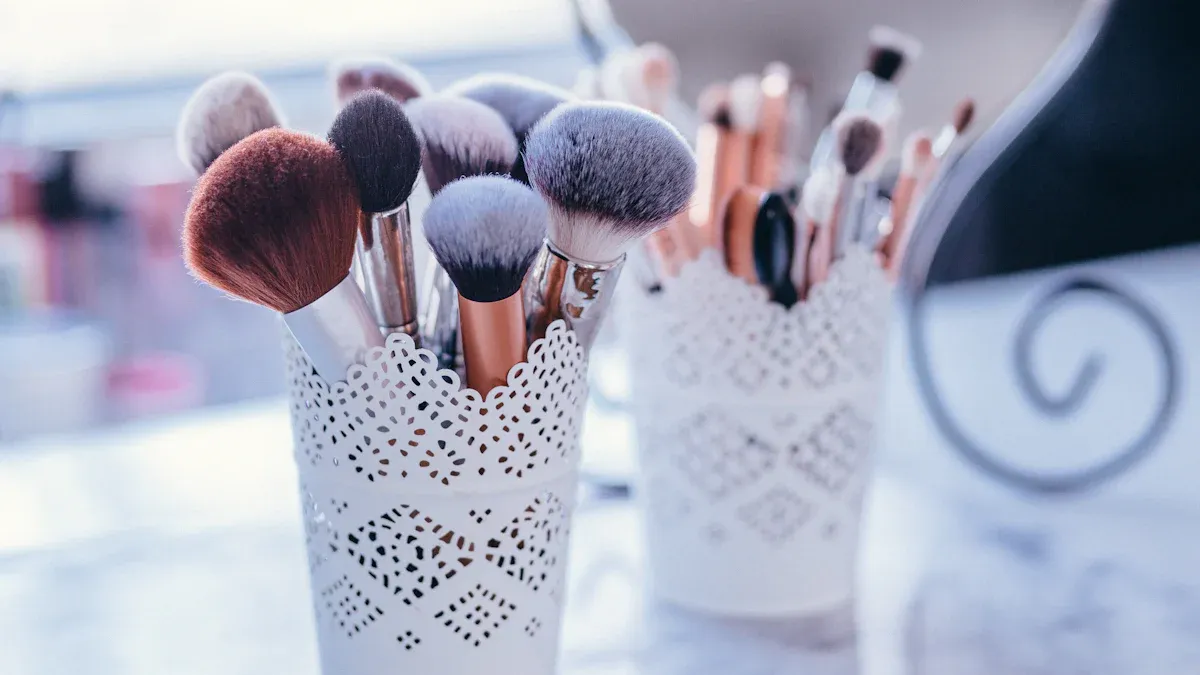
Store brushes upright in a ventilated holder. This prevents moisture and product buildup.
Clean the brush holder regularly with alcohol wipes to maintain hygiene.
Use a recycled jar or cup to keep brushes upright. This helps them maintain their shape.
Avoid soaking brushes, as this can damage the glue and promote bacteria growth.
Improper storage can lead to bent or damaged bristles, which compromises their effectiveness in makeup application. A 2020 study found that over 70% of used makeup brushes contained harmful bacteria, especially when stored improperly.
When to Replace Brushes
You should also know when to replace your brushes for optimal performance. Look for these signs:
Bristle shedding or fraying indicates the brush no longer provides a smooth application.
Persistent odors suggest bacterial growth, necessitating replacement.
Handle wear affects grip and application precision.
If cleaning doesn’t restore softness or shape, it’s time to replace the brush.
Professional makeup artists recommend replacing brushes every two years or sooner if they show signs of damage or excessive product buildup.
Selecting the right makeup brushes is essential for achieving beautiful results. The right brushes provide you with precision and control, allowing for meticulous application. They also promote hygienic application, reducing the risk of skin issues. Additionally, using the right brushes ensures even product distribution, preventing streaks or blotches.
Regular maintenance of your brushes enhances their longevity and effectiveness. Clean brushes prevent clumping and shedding, leading to smoother and more precise makeup application. Consistent care ensures a flawless finish every time.
Explore different brushes to enhance your makeup skills. With the right tools and proper maintenance, you can elevate your makeup game to new heights!
FAQ
What is the best way to clean my makeup brushes?
You should clean your brushes weekly. Use a gentle brush cleaner or mild soap. Rinse thoroughly and reshape the bristles. Let them dry flat or upright to maintain their shape.
How often should I replace my makeup brushes?
Replace your brushes every two years or sooner if you notice shedding, fraying, or persistent odors. Regularly check for signs of wear to ensure optimal performance.
Can I use the same brush for different products?
While you can use the same brush for different products, it’s best to avoid cross-contamination. Use separate brushes for liquid and powder products to maintain hygiene and achieve better results.
What type of brush is best for beginners?
A basic set with a foundation brush, powder brush, blush brush, and eyeshadow brush is ideal for beginners. These brushes cover essential applications and help you build your skills.
How do I store my makeup brushes properly?
Store your brushes upright in a clean holder to prevent damage. Keep them in a dry, ventilated area. Regularly clean the holder to maintain hygiene and prolong brush life.