

A good silk liner turns a crusty hostel blanket into something you’d actually sleep under. Backpackers, hostel-hoppers, and tropical campers all reach for one because it weighs almost nothing, packs to the size of a fist, and adds a clean barrier between your skin and whatever sleeping bag or sheet you’re handed. The six picks below cover the main ways people actually use them, from ultralight trekking to muggy jungle nights.
Your Options, Compared

Sea to Summit Comfort Blend Sleeping Bag Liner

Sea to Summit Reactor Insulated Sleeping Bag Liner

Sea to Summit Breeze Sleeping Bag Liner – Insect Shield
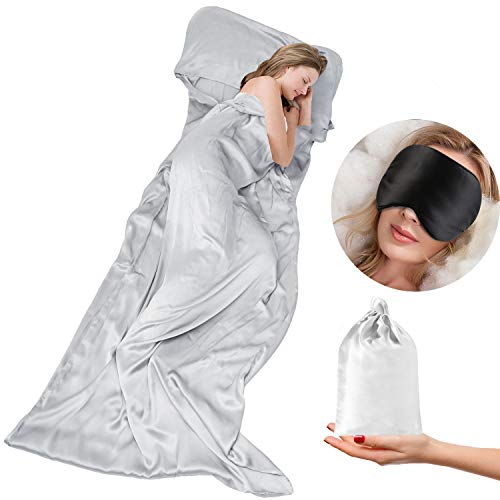
Cozysilk 100% Mulberry Silk Sleeping Bag Liner (19 Momme)

Sea to Summit Silk Blend Sleeping Bag Liner

Sea to Summit Breeze Sleeping Bag Liner
More Details On Our Top Picks
If you’re bouncing between hostels, huts, and the occasional backyard camp, this liner quietly does the dirty work for you. The knit fabric stretches with your tossing and turning, and the TENCEL Lyocell fibers (a cellulose-based material prized for softness and moisture control) blended with polyester pull sweat away from your skin on muggy nights.
It’s the gentlest entry point in this lineup. Compared with the Reactor below, it adds only a small bump of warmth, so it’s really a comfort-and-hygiene upgrade rather than a thermal rescue.
A Favorable Mix
- Stretch-knit construction moves with you, not against you
- Moisture-wicking blend stays comfortable in humid climates
- Lightweight enough that backpackers won’t notice it in the pack
- Easy machine care compared with pure silk options
- Works as a standalone sleep sheet on warm trips
Small Limitations
- Not a meaningful warmth booster for cold-weather trips
- Polyester content may feel less luxe than the all-silk Cozysilk
- Owners commonly report it runs warm in tropical humidity if you skip the sleeping bag entirely
Feature Snapshot
Built With In Mind
Hostel regulars, summer campers, and anyone who runs warm at night.
Reach For A Different Pick When
Cold-weather trekkers should grab the Sea to Summit Reactor Insulated Sleeping Bag Liner for serious warmth.
The Reactor exists for people who treat their sleeping bag like a lifeline. It uses Thermolite Pro fibers, which are hollow-core synthetic filaments designed to trap body heat, paired with a stretch-knit build and shaped arm openings that mimic a real mummy bag.
You may find this one a little overkill for July car camping, but on shoulder-season treks it lets you take a lighter sleeping bag without freezing. Where the Comfort Blend above just adds comfort, this one actually moves the needle on warmth.
Useful Strengths
- Adds meaningful warmth, useful for extending a summer bag into fall
- Shaped arm openings and stretch knit let you roll over freely
- Lightweight for the heat it delivers
- Hollow-core fibers dry faster than fleece if they get damp
Trade Offs
- Not as silky or skin-friendly as the pure silk Cozysilk
- Mummy shape can feel restrictive for side sleepers
- Specialty fabric calls for gentler washing than a basic liner
Who It Suits Best
Three-season backpackers and cold sleepers looking to stretch a lighter bag.
Skip It When
Warm-weather hostel travelers will be happier with the lighter Sea to Summit Comfort Blend Sleeping Bag Liner.
Tropical routes live or die by how well your sleep setup handles sweat and bugs. The Breeze with Insect Shield pairs a Coolmax-blend knit, a moisture-moving fabric used in athletic wear, with a built-in pillow sleeve, and treats the whole thing so insects stay away.
It’s the most purpose-built warm-climate option in this list. Compare it with the standard Breeze below, and the difference is that bug treatment, which matters more than comfort the first time mosquitoes find your hammock at 2 a.m.
What Earns Its Place
- Coolmax Ecomade blend wicks sweat efficiently in humidity
- Insect Shield treatment helps deter mosquitoes and other bugs
- Built-in pillow sleeve keeps your pillow from sliding off a thin mat
- Rectangle cut gives restless sleepers room to sprawl
Things To Weigh Up
- Insect treatment has a limited effective lifespan and may need re-treating over time
- Not the warmest layer for cool highland nights
- Specialty fabric should be washed carefully to preserve the treatment
Best Suited To
Jungle trekkers, hammock campers, and humid-climate travelers who battle bugs nightly.
Look Elsewhere When
Cold-sleeping backpackers should reach for the Sea to Summit Reactor Insulated Sleeping Bag Liner instead.
Mulberry silk is the soft, uniform silk spun by silkworms fed only mulberry leaves, and at 19 momme it has real substance (momme is a weight measure; higher numbers mean thicker, more durable fabric). The Cozysilk is the most indulgent liner in the roundup, with a double-sided design that lets you choose which face rests against your skin.
It also ships with a matching silk sleep mask, a small bonus that hotel travelers appreciate. This is the one to grab when you’re sensitive to synthetics or just want the smoothest possible surface against your face for ten nights in a row.
The Helpful Details
- Pure mulberry silk feels noticeably smoother than any blend
- Naturally temperature regulating for warm climates
- Double-sided construction lets you flip for preferred texture
- Includes a matching silk sleep mask
- Kind to sensitive skin and natural hair
Honest Caveats
- Demands delicate hand-washing, rougher treatment wears silk quickly
- Higher price bracket than the synthetic blends
- Less abrasion-resistant than the Thermolite options for rugged trips
Quick Technical Notes
Whose Shelf It Belongs On
Hotel-hoppers, tropical travelers, and anyone with sensitive skin or curly hair who dreads synthetic pillow fabric.
A Better Fit Elsewhere
Hardcore backpackers chasing warmth should grab the Sea to Summit Reactor Insulated Sleeping Bag Liner.
Think of the Silk Blend as the bridge between the all-silk Cozysilk and the synthetic Comfort Blend. It mixes 28% silk with Thermolite Pro yarns, giving you that smooth hand-feel where it counts plus real thermal performance for chilly nights.
Shoulder-opening vents and a drawcord footbox let you tune airflow. Compared with the Reactor, it feels more like a luxury item that happens to add warmth, and unlike pure silk, it can take more wear.
Well-Handled Touches
- Silk-and-Thermolite blend offers warmth without scratchiness
- Drawcord footbox helps vent or trap heat as needed
- Stretch panels along the seams reduce overnight binding
- More durable than the pure silk option on rough trips
Soft Spots
- Not as silky as the 100% mulberry silk Cozysilk
- Costs more than basic synthetic liners
- Mid-weight feel isn’t ideal for ultralight summer-only trips
Perfect Match For
Travelers who split trips between warm lowlands and cool highlands and want one liner that handles both.
Swap It Out When
Pure warm-weather travelers will find the Sea to Summit Breeze Sleeping Bag Liner lighter and cooler.
The plain Breeze is the warm-weather workhorse. The Coolmax Ecomade knit wicks moisture efficiently, the rectangle shape gives you room to sprawl, and the pillow sleeve keeps everything in place.
Without the Insect Shield treatment of pick #3, this version is lighter, simpler, and easier on the wallet. It’s the right call for temperate trips where bugs aren’t a nightly battle.
Everyday Perks
- Lightweight build packs small in a backpack or carry-on
- Multiple shape options including mummy and rectangular cuts
- Coolmax fibers move sweat away from skin
- Built-in pillow sleeve adds convenience
- Lower cost than the silk-based picks
Potential Drawbacks
- No insect protection, unlike the Insect Shield version
- Minimal warmth boost for cool nights
- Less luxurious against the skin than the Cozysilk
Key Product Details
The Right Fit
Budget travelers, summer campers, and anyone who wants a no-fuss moisture-wicking liner.
Another Choice May Suit
Tropical travelers worried about mosquitoes will appreciate the Sea to Summit Breeze Sleeping Bag Liner – Insect Shield for added protection.
Choosing The Right Silk Liner For Your Trip
Picking a liner starts with honestly answering one question: where and when will you actually use it? A liner that shines in a five-star hotel will feel inadequate on a wet alpine night, and the opposite is just as true.
Material dictates feel. Pure mulberry silk is the smoothest and most temperature-stable, but it costs more and needs careful washing. Synthetic blends with TENCEL or Coolmax wick sweat faster, dry quickly, and handle rougher trips, which is why most backpackers default to them. Insulated Thermolite options add measurable warmth, useful if you run cold or want to take a lighter sleeping bag.
Shape matters more than people expect. A mummy cut saves weight and heat but cramps restless sleepers. A rectangular liner feels like a real sheet, doubles as a hostel hygiene layer, and packs almost as small. The pillow sleeve found on the Breeze models is a small touch that makes a real difference on thin sleeping pads.
Weight and packed size deserve attention if you’re carrying it for weeks. A liner around 200 to 350 grams disappears in a pack, while anything heavier belongs in car-camping or hotel-only kits. Always check the momme weight for silk; 19 momme is a sensible middle ground, lighter weights tear too easily.
Key Things To Think About Before You Buy
Where Shoppers Go Wrong
The most common slip-up is assuming any liner adds serious warmth. Basic silk and Coolmax liners mostly add comfort and hygiene, not degrees. Choose a Thermolite or insulated model if cold nights are part of your trip.
Another trap is ignoring the shape. A rectangular liner stuffed into a mummy sleeping bag bunches and reduces insulation, while a tight mummy liner inside a roomy rectangular bag feels like a straightjacket. Match the cut to your sleeping bag.
When Paying More Pays Off
Higher-end silk earns its keep through comfort, durability, and skin-friendliness. A 19 momme mulberry silk liner like the Cozysilk resists tearing far better than thin silk, sleeps cooler in heat, and stays gentle on skin for hundreds of nights. If you travel often or sleep on scratchy sheets, the upgrade is worth it.
Frequently Asked Questions
Do silk sleeping bag liners actually keep you warmer?
A plain silk liner adds only a small bump of warmth, usually a few degrees. Insulated options like the Sea to Summit Reactor add meaningful heat. For real cold-weather performance, choose a Thermolite or thermal-lined model.
Can you machine wash a silk sleeping bag liner?
Pure silk liners need gentle hand-washing with mild soap to last. Synthetic blends like the Comfort Blend and Breeze tolerate machine washing on delicate cycles. Always air dry to protect the fibers.
Are silk liners good for hot weather?
Yes. Silk and Coolmax knits both breathe well and wick moisture, which keeps you cooler than sleeping directly on a synthetic sheet. For tropical trips, the Breeze and Insect Shield models handle humidity especially well.
Do silk liners really protect against bed bugs in hostels?
They help, not eliminate. A liner creates a barrier so bugs have to climb through fabric to reach you, and tucked-in models make that harder. Pair it with a routine bed-bag check for real protection.
How long does a quality silk liner last?
With gentle care, a 19 momme mulberry silk liner like the Cozysilk typically lasts several years of regular travel. Synthetic Thermolite and Coolmax options tend to last longer, often five or more years of frequent use.
Closing Remarks
The right silk sleeping bag liner comes down to honest matchup between climate, trip length, and how delicate your skin runs. For most travelers, picking by warmth and shape matters more than chasing the softest fabric. Whichever option you choose from this list, a clean, comfortable layer between you and your sleeping bag makes every trip feel a little more like home.
