

Low porosity strands are famously stubborn. The cuticle, which is the hair’s outermost protective layer, lies flat and tight, so heavier oils just sit on top, leaving a greasy film instead of real hydration. Shoppers chasing length need formulas thin enough to slip past that outer barrier, deliver nutrients to the scalp, and still rinse clean without buildup. The picks below filter for exactly that profile.
The Main Contenders

African Pride Moisture Miracle 5 Essential Hair Oils, 8 Oz

African Pride Olive Miracle Growth Oil, 8 fl oz
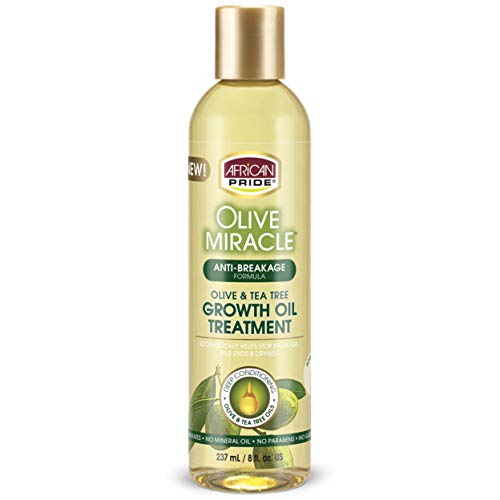
African Pride Olive Miracle Anti-Breakage Growth Oil 8 fl oz

Africa’s Best Carrot Tea Tree Oil, 6 fl oz

Jamaican Mango & Lime Black Castor Oil 4 oz (Xtra Dark)

Wild Growth Hair Oil 4-Pack, 4 oz Each

Dr. Sebi’s Batana Hair Oil 4 fl oz

Dr. Sebi’s Healthy Hair & Skin Kit

Dr. Sebi’s Beard Oil with Batana 1 fl oz
The Picks, Examined More Closely
Low porosity hair tends to reject anything thick, so the Moisture Miracle formula leans on a five-oil blend built around argan, castor, and Vitamin E, which together stay thin enough to absorb into a tightly closed cuticle. That matters because buildup is the number-one complaint from shoppers with this hair type, and the brand specifically markets the bottle as a lightweight scalp treatment rather than a heavy sealant.
For a midweek refresh between wash days, a few drops warmed between the palms and pressed into the scalp can soften flaking without leaving a slick film. Compared to the single-ingredient Olive Miracle coming up next, this one trades simplicity for a more rounded nutrient profile, which is the real reason it earns the lead slot here.
Practical Pluses
- Five-oil profile gives broader nutrient coverage than single-ingredient picks
- Lightweight feel that tends to absorb rather than sit on strands
- Vitamin E in the blend supports scalp conditioning during growth phases
- 8 oz bottle runs long for daily users who apply a few drops at a time
- Multi-purpose: works as a pre-wash scalp oil or a light post-wash sealant
Trade Offs
- Fragrance may be noticeable to those sensitive to scented hair products
- Owners commonly report the bottle pump can clog if oil cools and thickens in the nozzle
Key Attributes
Who It Suits Best
Shoppers who want a single, moderately priced oil that handles daily moisture and occasional scalp massage in one step.
Where Another Pick Suits Better
Prefer a single-ingredient formula? The African Pride Olive Miracle Growth Oil is a simpler alternative for purists.
Some routines don’t need five oils when one does the job well. The Olive Miracle formula centers on extra-virgin olive oil, which has a long history in textured-hair care because the molecular weight is light enough to coat strands without suffocating them. For a low-porosity routine built around sealing ends and calming a tight scalp, the simplicity is the point.
Where the Moisture Miracle leans into a multi-oil nutrient story, this bottle trades breadth for a single, familiar ingredient list that’s easy to layer with a leave-in or a deep conditioner. Beginners tend to find that a one-ingredient approach makes it easier to identify what their hair actually responds to, which is why this pick stays in the rotation.
Useful Touches
- Single-ingredient clarity makes it easy to track what hair responds to
- Extra-virgin olive base has a proven track record on textured strands
- 8 fl oz size delivers a low cost per application over time
- Layers cleanly under creams, gels, and leave-ins without pilling
Points To Note
- No added proteins or fortifying agents, so it pairs best with a strengthening product for damaged hair
- Olive oil can feel heavier than argan-based options on the finest low-porosity strands
- Some shoppers prefer a scented formula, and this one stays fairly neutral
Made For
Beginners who want a clean, single-ingredient oil for daily sealing and scalp massage without a learning curve.
Not Your Match When
Damaged ends that need reinforcement will do better with the African Pride Olive Miracle Anti-Breakage Growth Oil further down the list.
Breakage is the most common reason length stalls, and the Anti-Breakage formula takes the same olive-oil backbone as the original Olive Miracle and pushes it toward strand reinforcement. The “maximum strengthening” framing targets users who notice snapping at the ends or thinning around the hairline, where support matters more than surface shine.
For low porosity hair specifically, the trick is moderation: warm a tiny amount between the palms and focus on the mid-lengths and ends, because the cuticle is open enough at the tips to actually catch the strengthening payoff. That’s a different application pattern than a pure scalp oil, and it explains why this bottle earns its own slot rather than overlapping with picks above.
Noteworthy Benefits
- Strengthening focus suits hair that snaps before it reaches a target length
- Olive-oil base keeps the formula approachable for low-porosity application
- 8 fl oz volume supports several months of twice-weekly use
Small Caveats
- Strands already prone to buildup will want a clarifying shampoo in the rotation to keep things balanced
- Heavier than the original Olive Miracle, so a little goes a long way on finer low-porosity hair
Right Fit For
Shoppers dealing with visible breakage who want an oil that does double duty as both a sealant and a fortifying treatment.
Look Elsewhere When
Anyone who wants a clean-beauty, plant-based formula may prefer Dr. Sebi’s Batana Hair Oil instead.
The Carrot Tea Tree blend reads like a scalp product in disguise, since tea tree oil is widely known for its tingling, soothing sensation on irritated skin. Pair that with carrot oil, a source of beta-carotene, and the formula aims at scalp comfort first, with strand benefits as a secondary win. For low porosity types, the lighter feel of carrot oil keeps the cuticle happy while the tea tree handles the itch.
This is also the smallest bottle in the lineup at 6 fl oz, which is worth knowing before committing. It’s the right size for shoppers who want to test the formula over a month or two without dedicating shelf space to a larger bottle.
What Makes Sense
- Tea tree element brings a familiar soothing feel for irritated scalps
- Carrot oil base keeps the texture light enough for tight cuticles
- Smaller 6 fl oz bottle suits shoppers testing the formula for the first time
Where It Is Less Suited
- Tea tree’s scent is medicinal, which not every shopper enjoys daily
- Smaller format means more frequent repurchasing for heavy users
Best Suited To
Anyone with a flaky, itchy scalp who wants a tea tree-forward oil without the heaviness of a traditional medicated treatment.
Reach For A Different Pick When
Shoppers who want a richer castor-based formula for thicker textures should turn to the Jamaican Mango & Lime Black Castor Oil.
Black castor oil is the heavyweight of the textured-hair world, and the Xtra Dark version from Jamaican Mango & Lime uses manually ground Jamaican castor beans for a thicker, more traditional consistency. That’s a deliberate choice for locs, braids, and twists, where the hair needs a richer sealant that can survive manipulation and wear.
For low porosity strands, the trick is using it sparingly along the length and scalp, since this oil is denser than anything reviewed so far. A pea-sized amount goes further than shoppers expect, and the bottle tends to last a long time even with consistent use.
Strong Points
- Manually ground castor beans give the formula an authentic, thicker texture
- Designed specifically for locs, braids, and twists, where richer oils are needed
- Xtra Dark variant is favored by shoppers focused on scalp conditioning routines
- Small 4 oz bottle still lasts for months because a little product covers a lot of hair
Things To Weigh
- Heavier feel than argan or olive oils, so it can build up on finer low-porosity hair without regular clarifying
- Strong, earthy scent is noticeable compared to the lighter picks earlier in the list
Who Will Love This
Protective-style wearers with thicker strands who want a traditional castor oil that holds up between maintenance appointments.
Swap It Out When
Finner low-porosity textures will find the Wild Growth Hair Oil a friendlier daily option than a true castor.
Wild Growth is a household name in detangler circles, and the four-bottle format exists for a simple reason: daily users run through this stuff. The formula layers olive, jojoba, and coconut oils with a Wild Growth nutrient complex, plus vitamins and minerals like calcium, magnesium, and iron, giving it a denser ingredient story than most competitors on the list.
For low porosity routines, the key is treating it as a detangling and length-retention oil rather than a daily scalp treatment. A little goes a long way on freshly shampooed strands, and the bulk packaging rewards shoppers who want to stock up without reordering every few weeks.
Useful Highlights
- Four-bottle bundle rewards long-term users who apply oil almost every day
- Multi-oil base (olive, jojoba, coconut) offers broader conditioning than single-ingredient picks
- Added vitamins and minerals aim at the nutrient side of growth support
- Well-known detangler reputation, so it slots into a wash-day routine easily
Honest Caveats
- Strong herbal scent is polarizing and lingers longer than lighter oils
- Heavier texture means low-porosity shoppers need to dilute with water or use sparingly to avoid buildup
- Bulk format is overkill for anyone just testing the formula for the first time
The Right Fit
Committed daily users who want a bulk supply of a familiar detangler and don’t mind a richer texture.
Where A Sibling Pick Shines
Curious first-timers will get a friendlier intro with the single-bottle African Pride Moisture Miracle formula.
Batana oil is having a moment, and this Dr. Sebi’s blend keeps the formula in its narrowest form: raw batana, coconut, and olive, with the brand framing it as a one-month supply. For low porosity hair, the lighter plant-based blend is genuinely helpful because it skips the heavier butters that often leave residue on tightly closed cuticles.
The 4 fl oz size is positioned for daily finishing, and the bottle tends to fit neatly into a routine that already includes a leave-in or a cream. It is also the cleanest ingredient list in the lineup, which is the reason it earns its own slot rather than competing head-to-head with the African Pride picks.
Everyday Perks
- Short, plant-based ingredient list appeals to clean-beauty shoppers
- Lightweight finish works well as a daily oil on low porosity strands
- Batana oil is the headline ingredient, supported by familiar coconut and olive
- Compact 4 fl oz bottle fits easily into a multi-step routine
Things To Keep In Mind
- One-month positioning means frequent reordering for daily users
- Batana oil alone is less conditioning than a fortified castor blend on very dry scalps
Who Should Grab It
Shoppers building a clean-beauty routine who want a simple, plant-based oil for daily finishing and scalp support.
Consider Something Else When
Anyone wanting a combined hair-and-skin package should look at the Dr. Sebi’s Healthy Hair & Skin Kit instead.
The kit takes the batana-oil concept and stretches it into a hair-and-skin routine, pairing the oil with an herbal skin balm under one bundle. That makes it a slightly different category entry: it’s not strictly a hair oil, but the batana component is positioned for strands and scalp, with the balm adding a second use on dry patches or edges.
For a low porosity shopper who also deals with dry skin or edge irritation, the combined format trims down a separate skin product from the routine. It’s a sensible consolidation rather than a single-purpose hair treatment, and that’s the lens the review should be read through.
Notable Gains
- Two-in-one format covers scalp, strands, and dry skin in one purchase
- Batana oil and herbal balm lean on the same plant-based philosophy
- Useful for shoppers who want to address both hair thinning and dry edges
Possible Compromises
- Buyers strictly after a hair-only oil will find the bundled balm unnecessary
- Lower total volume of hair oil compared to a dedicated 8 oz bottle like the African Pride Moisture Miracle
Built With In Mind
Shoppers who want a unified hair-and-skin routine with plant-based ingredients and don’t mind the bundled format.
Skip It When
Anyone focused only on hair growth will get more oil per dollar from the African Pride Moisture Miracle 5 Essential Hair Oils.
The beard oil rounds out the list because facial hair deserves its own conversation. This formula layers argan, jojoba, and grapeseed oils with batana, which together target coarse, wiry facial hair that can feel dry against the skin underneath. For men with low-porosity facial hair, the lightweight feel matters just as much as it does on the scalp, because heavy oils leave a residue that no one wants on a pillowcase.
The 1 fl oz size is standard for beard oils and lasts a couple of months with daily use. It’s a niche entry on a list mostly aimed at scalp-driven growth, but the grooming angle makes it worth including for anyone whose routine extends below the jawline.
Good Reasons To Consider
- Multi-oil blend with batana softens coarse facial hair without a greasy feel
- Small dropper-style bottle is easy to control for a few drops at a time
- Argan and jojoba bring familiar grooming-oil credibility to the formula
Details To Watch
- 1 fl oz size runs out quickly for users with very long or dense beards
- Strictly a grooming product, not a scalp treatment, so it doesn’t replace any pick above
Whose Shelf It Belongs On
Men with low-porosity facial hair who want a softening oil that absorbs cleanly and doesn’t leave residue on the skin.
A Better Fit Elsewhere
Scalp-focused shoppers chasing length will want the Dr. Sebi’s Batana Hair Oil 4 fl oz rather than the beard-specific bottle.
Matching the Right Oil to Low Porosity Strands
Low porosity hair behaves differently from other types, and a generic “best oil” approach usually backfires. The cuticle’s tight structure means the product has to be light enough to penetrate, but rich enough to actually deliver a benefit once it gets in. That tension is the central filter for every pick on this list.
Viscosity, which is how thick or thin a liquid feels, is the first thing to assess. Thinner oils like argan, jojoba, grapeseed, and carrot tend to absorb into a low-porosity strand faster, while heavier butters and traditional black castor need to be used sparingly. The second filter is ingredient count: shorter lists make it easier to track what the hair responds to, while longer lists offer broader nutrient coverage. Neither approach is wrong, but the choice depends on whether the shopper wants a precision tool or a multi-purpose blend.
Finally, scalp condition matters as much as strand porosity. An itchy, flaky scalp tends to respond well to tea tree-forward formulas like the Carrot Tea Tree Oil, while a tight, dry scalp benefits from a richer castor or batana blend. Picking based on scalp profile first, then strand behavior, is the most reliable way to avoid the buildup problem that frustrates so many low-porosity routines.
What Low Porosity Hair Asks of a Growth Oil
Penetration Over Coating
The goal isn’t to sit on top of the hair, it’s to get past the cuticle and into the cortex, which is the inner structural layer of the strand. Lighter oils win here because the molecules are small enough to slip through the tightly closed outer layer. Heavier oils can still work, but they need to be applied in smaller amounts and balanced with a clarifying shampoo in the rotation.
Layering With Water-Based Products First
A common mistake is applying oil to dry hair before a water-based leave-in. Low porosity strands need moisture to hold onto, and oil seals that moisture in, so applying oil first can block water from ever reaching the cortex. The cleanest approach is a water-based leave-in or hydrating mist, then a small amount of oil on top to seal.
Common Shopping Slip Ups
Treating every oil the same way is the first trap. Heavier picks like the Wild Growth four-pack or the Jamaican Mango & Lime castor work well in small doses but can suffocate finer low-porosity strands if applied daily without a clarifying reset. The second trap is skipping scalp assessment: a healthy scalp grows hair faster than a perfect strand product ever could, so formulas with tea tree or batana often outperform trendier picks when the scalp is the real bottleneck.
Where The Extra Money Goes
Premium pricing in this category usually shows up in two places: ingredient sourcing and concentration. Batana oil, for instance, comes from a specific Central American palm and is labor-intensive to produce, which is why a smaller 4 fl oz bottle can cost more than a generic 8 oz olive-oil formula. A higher concentration of active ingredients also means a smaller bottle lasts longer per use, so the actual cost-per-application gap is often smaller than the shelf price suggests. For shoppers with specific concerns like scalp irritation or protective-style maintenance, the upgrade tends to be worth it; for casual daily sealing, a value pick like the African Pride Olive Miracle delivers most of the benefit at a friendlier cost.
Frequently Asked Questions
What makes an oil good for low porosity hair?
Lightweight oils with smaller molecules, such as argan, jojoba, grapeseed, and carrot, tend to absorb into a tightly closed cuticle more easily than heavier options like castor or olive. The goal is penetration, not coating.
How often should low porosity hair be oiled?
Most routines work well with one to three oil applications per week, paired with a clarifying shampoo every two to four weeks to prevent buildup. Daily application can work for very dry scalps, but the hair should be monitored for residue.
Can these oils really help hair grow?
Oils support a healthy scalp environment, which is the foundation for growth, but they don’t override genetics or medical factors. Consistency and a balanced routine matter more than any single product.
Is castor oil safe for low porosity hair?
Yes, in small amounts. Jamaican black castor is thicker than other picks on the list, so it works best on thicker strands or protective styles, while finer low-porosity types should dilute it or use it less often.
Do I need to wash oil out of low porosity hair?
Yes, regular cleansing prevents the buildup that low-porosity strands are most prone to. A sulfate-free shampoo or a weekly clarifying wash keeps the cuticle clear and ready for the next application.
The Takeaway
Low porosity hair rewards patience and the right product match, not a stack of bottles. Start with a lightweight formula from the picks above, pay attention to how the scalp and strands respond over a few weeks, and adjust the weight or frequency from there. The right oil for this hair type is the one that disappears into the cuticle, not the one that sits on top of it.
