

You don’t need a clinic appointment or a four-figure invoice to bring light therapy into your routine, and that’s the whole appeal of today’s wallet-friendly masks. Pick the right one and you get a cordless, hands-free session you can run from your couch on a Sunday evening. Plenty of affordable led face masks now cover face and neck, mix several color modes, and recharge over USB, so the gap between a $40 pick and a $700 brand-name rig has shrunk dramatically. The list below sorts the genuinely thoughtful options from the ones that overpromise, with real attention to fit, LED count, and wavelength variety.
A Closer Look At The Lineup

LuxRenew 4D Contour-Fit LED Light Therapy Mask for Face & Neck

Hydraskincare FM-01 LED Light Therapy Mask for Acne

IFAE Red Light Therapy Mask for Face and Neck, 396 LEDs

GIHWRRI 7-Color FDA-Cleared LED Light Therapy Mask

INTEO Wireless LED Face Mask with 4 Modes

INTEO 660nm Red & 850nm NIR LED Face and Neck Mask

INIA GLOW 4D Wireless Red Light Therapy Mask with Dual NIR

AMIRO Light Facial Mask, 3 Smart Skincare Modes (Spectra Silver)
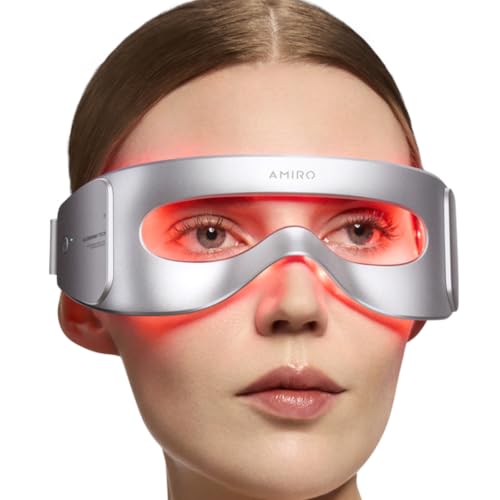
AMIRO 4-Wavelength Red Light Therapy Eye Mask

AMIRO PDRN Eye Cream with Red Light and Microcurrent Massager
A Closer Look At Each Pick
The LuxRenew 4D Contour-Fit Mask is the closest thing in this roundup to a complete at-home setup, wrapping both face and neck in a single cordless unit. Its 272 face LEDs and 128 neck LEDs sit inside a soft silicone shell that curves along the jawline, with ventilation holes that keep heat buildup reasonable during a 15-to-20-minute session.
Seven color modes plus near-infrared (NIR, the deeper-penetrating wavelength used for collagen support) give you room to rotate between anti-aging, calming, and breakout-focused routines, and three energy levels let you ease in if your skin is new to light therapy. Compared with the Hydraskincare FM-01 ahead, this one trades simplicity for breadth: more LEDs, more wavelengths, more adjustability.
Well-Handled Touches
- Combined face and neck coverage in a single rechargeable unit removes the need to buy two separate panels.
- Adjustable Velcro straps accommodate a wider range of head sizes than most rigid-shell competitors.
- Seven color modes plus NIR let you target collagen, redness, and breakouts without swapping devices.
- Three intensity settings help you build tolerance if your skin is sensitive to bright light.
- Soft silicone construction is generally easy to wipe clean between sessions, and the lightweight frame won’t weigh your neck down.
Things To Consider
- The curved shell sits a touch bulky on smaller faces, which may leave slight gaps near the temples.
- Built-in rechargeable batteries mean you’ll need to plan around charging cycles if you use the mask daily.
- More modes also means a steeper learning curve when you’re first figuring out what each color is supposed to do.
Key Specs
Who It Suits Best
Anyone who wants a cordless, all-in-one mask covering face and neck and prefers to rotate light colors for different skin goals rather than commit to a single wavelength.
Skip It When
The Hydraskincare FM-01 is a simpler alternative when you only care about acne-focused red and blue light and want the easiest possible routine.
The Hydraskincare FM-01 strips the light therapy concept down to what matters for acne-prone skin: red, blue, infrared, and a mixed setting. It’s an older-generation mask that has stuck around because the four-mode setup is genuinely useful, and the price tends to sit well below flashier newcomers.
The build is simpler than the LuxRenew above, with a basic plastic-and-silicone shell rather than a contoured 4D curve, but the trade-off is a lighter, less intimidating first device. Red targets full-face wrinkles, blue calms mild to moderate inflammatory acne, infrared delivers gentle warming, and the mixed mode combines red and blue for stubborn breakout zones.
Why It Works Well
- Four focused modes keep the routine simple when you’re new to light therapy and unsure which wavelength to pick.
- Lower price point than most multi-mode masks, making it a sensible starting option.
- Mixed-light setting lets you treat acne and early signs of aging in one session.
- Infrared mode adds a warming element for stiffness or muscle relaxation around the jaw.
Worth Noting
- Shell design is less contoured than newer masks, so coverage near the temples and under the chin may be uneven.
- No neck coverage, so you’d need a separate panel if you want to extend below the jawline.
- Lacks the adjustable intensity levels found on the LuxRenew, which matters for sensitive skin.
Right Fit For
Beginners tackling mild to moderate acne who want a no-fuss four-mode mask at the lowest entry price in this list.
Consider Something Else When
The LuxRenew 4D Contour-Fit Mask is the upgrade path when you want neck coverage and more granular intensity control.
The IFAE mask leans into three clinically familiar wavelengths: 460nm blue for acne bacteria, 660nm red for surface-level collagen work, and 850nm near-infrared for deeper tissue reach. Three wavelengths and 396 LEDs make it the most “spec-dense” pick in the mid-price tier, and it’s one of the few that explicitly calls out both face and neck coverage.
For someone whose main concerns are wrinkles and uneven texture, the red-NIR pairing is the heart of the device, and the blue mode shows up for occasional breakouts. It’s a less flashy unit than the LuxRenew but trades color variety for wavelength precision, which is often the smarter move for results-driven users.
Strengths Worth Knowing
- Three-wavelength design focuses on the wavelengths with the strongest track record for skin rejuvenation.
- 396 LEDs across face and neck panels keep session times reasonable without leaving obvious dark spots.
- Combo sessions let you alternate between anti-aging and acne routines in the same week.
- Sits in a comfortable middle ground between bare-bones four-mode masks and full-color 7-mode flagships.
Honest Caveats
- No green, yellow, or amber modes, so anyone wanting a broader color menu will feel limited.
- Neck panel fit can vary by user; smaller frames may notice slight shifting during longer sessions.
Feature Snapshot
Best Suited To
Users who care more about wavelength precision than color variety, particularly anyone targeting wrinkles alongside occasional breakouts.
Look Elsewhere When
The INIA GLOW 4D Mask is a stronger choice when you want a softer medical-grade silicone shell and dual NIR channels.
The GIHWRRI mask is the safest-feeling pick in this roundup, because it’s one of the few affordable LED masks that actually carries FDA clearance. Seven color modes cover anti-aging, acne, redness, and brightening, and 70 high-intensity LEDs sit inside a rechargeable soft silicone shell.
For cautious first-time users, that clearance is the headline feature, and the seven wavelengths earn their keep by handling both collagen-focused routines and breakout control. It’s not the most powerful mask on spec sheet alone, but the regulatory angle makes it worth a closer look for anyone worried about safety.
Notable Upsides
- FDA clearance offers a level of regulatory reassurance most budget masks skip.
- Seven therapeutic wavelengths handle aging, acne, and redness in one device.
- Rechargeable soft silicone shell is comfortable and easy to wipe down between sessions.
- 70 LEDs deliver enough density for a consistent treatment across the cheeks and forehead.
Points To Note
- Lower LED count than the IFAE mask above, so coverage at the jawline may feel less even.
- FDA clearance covers safety, not performance claims, so results will still depend on consistent use.
Quick Facts
Made For
First-time LED mask shoppers who want a cleared safety profile and don’t need the highest LED density in the category.
Not Your Match When
The LuxRenew 4D Contour-Fit Mask is the better fit for shoppers wanting 400+ LEDs and dedicated neck coverage in a single unit.
The INTEO Wireless Mask is a coverage beast, with 680 light beads split between face, neck, and upper chest panels. Each cluster contains four LED beads, so the device delivers more raw emitter density than nearly any other pick here.
The unit runs cordless, and the four-mode setup keeps the controls simple even with all that hardware underneath. It’s a strong fit for anyone whose skin concerns extend past the jawline, particularly when chest area starts showing the same fine lines and sun damage as the forehead.
What Works In Its Favor
- 680 light beads offer some of the densest coverage in the affordable category.
- Face, neck, and upper chest panels treat the areas where sun exposure tends to age fastest.
- Wireless operation makes it easy to wear during a podcast or TV episode.
- Four-mode setup keeps controls approachable despite the higher LED count.
Trade-Offs To Consider
- Larger shell takes longer to fit and adjust than smaller face-only masks.
- More LEDs mean longer charge cycles, so heavy daily users may need to plan charging around routines.
Who Should Grab It
Anyone wanting maximum emitter density and willing to wear a larger panel in exchange for face, neck, and chest coverage.
Swap It Out When
The INTEO 660nm Red & 850nm NIR Mask is a better fit when you prefer a simpler two-wavelength routine with fewer LEDs.
The second INTEO on this list takes a focused approach, pairing 660nm red light with 850nm near-infrared across 680 LEDs and face, neck, and upper chest coverage. Two wavelengths instead of seven, but the ones it picks are the workhorses of the category.
It’s a useful counterweight to its sibling above: same hardware density, simpler control scheme. If your routine is anti-aging first and you’re not worried about acne or redness, the minimalist approach can be easier to maintain than juggling multiple color modes.
Where It Excels
- Red and NIR pairing targets the two wavelengths with the strongest anti-aging track record.
- 680 LEDs deliver dense coverage without the price tag of seven-color flagships.
- Two-wavelength focus makes the routine easier to remember week after week.
Soft Spots
- No blue light, so breakouts need a separate tool or a different mask.
- Fewer color options means less flexibility if your skin goals shift over time.
- Shell size is similar to the other INTEO, so smaller faces may still notice fit gaps near the temples.
Feature Rundown
Perfect Match For
Anti-aging focused users who want a two-wavelength routine and don’t need acne or redness modes cluttering the menu.
A Better Fit Elsewhere
The Hydraskincare FM-01 is the smarter starting point when you want blue light for breakouts in a simpler four-mode setup.
The INIA GLOW 4D is the most premium-feeling mask in the roundup, with 320 LEDs, dual near-infrared channels, and a flexible medical-grade silicone shell that hugs the face without pinching. The 4D curve aims for even light distribution across forehead, cheeks, chin, and jawline.
It doesn’t have the LED count of the INTEO above, but the silicone quality and dual-channel NIR setup position it as the comfort-first choice for users who wear masks during longer sessions. Dual NIR is the standout spec here, since most affordable masks settle for a single near-infrared wavelength.
Where It Delivers
- Dual NIR channels give the deeper-penetrating wavelength more coverage than single-channel masks.
- Medical-grade silicone feels softer and more flexible than the rigid plastic shells on cheaper units.
- 4D curved design follows the contours of the face for more even light distribution.
- 320 LEDs are enough to keep treatment times reasonable without heat hot spots.
Some Limits To Know
- Face-only coverage, so the neck and chest get left out of the routine.
- Higher price point than the IFAE and Hydraskincare masks for fewer total LEDs.
Whose Shelf It Belongs On
Users who prioritize comfort and dual NIR depth over total LED count and don’t need neck coverage.
Reach For A Different Pick When
The IFAE Red Light Therapy Mask is the better call when you want 396 LEDs and a built-in neck panel at a similar price.
The AMIRO Light Facial Mask is the speed-focused pick here, with five light wavelengths bundled into three smart modes and a five-minute session time per mode. Purify, Firm, and Glow each run short, so you can stack all three in roughly 15 minutes.
Five wavelengths (red, blue, green, yellow, and infrared) is more breadth than most masks at this size, and the 5-minute routine removes the most common excuse for skipping sessions. The Spectra Silver finish gives it the most visual polish of any mask in this list.
Positive Points
- Three smart modes compress a full multi-wavelength routine into 15 minutes total.
- Five wavelengths cover anti-aging, acne, redness, and brightening in one device.
- Compact shell is easier to fit into a packed skincare drawer than the larger INTEO units.
- Spectra Silver finish gives it a cleaner aesthetic than most matte-black masks.
Where It May Fall Short
- Face-only design leaves the neck untreated.
- Smart modes reduce manual control, so users wanting to dial in a single wavelength will feel boxed in.
Built With In Mind
Busy people who want a fast, broad-spectrum session they can actually fit into a weekday morning.
Where Another Pick Suits Better
The LuxRenew 4D Contour-Fit Mask makes more sense when neck coverage and adjustable intensity matter more than session speed.
The AMIRO Eye Mask is the only device in the roundup focused on the under-eye zone, with 96 high-density LEDs and four wavelengths: 850nm infrared, 633nm red, 660nm deep red, and 605nm amber. Crow’s feet, under-eye wrinkles, and dark circles are the headline targets.
Full-coverage silicone targets 11 expression lines around the eyes, and the three-minute session time makes it the easiest add-on to stack with any face mask above. For shoppers whose main concern is the eye area, this is more useful than another full-face mask.
A Strong Showing
- Four wavelengths around the eyes cover fine lines, dark circles, and puffiness in one mask.
- 96 LEDs at high density deliver focused light where full-face masks often under-treat.
- Three-minute sessions are easy to add to any morning or evening routine.
- Medical-grade silicone shell is comfortable against the delicate eye area.
Worth Bearing In Mind
- Eye-area only, so this is an add-on, not a replacement for a full-face mask.
- Photobiologically certified for eye safety, but users with light-sensitive conditions should still consult a professional.
Who Will Love This
Anyone whose primary skin concern is fine lines, dark circles, or puffiness around the eyes rather than the broader face.
Where A Sibling Pick Shines
The AMIRO Light Facial Mask is the better primary device when you need broader face coverage alongside eye-area treatment.
The AMIRO PDRN Eye Cream is the most unusual entry on the list: it’s a topical eye cream paired with built-in red light therapy and a gentle microcurrent massager, blending skincare and device in one wand. PDRN (polydeoxyribonucleotide, a skin-repair ingredient often used in post-procedure products) and multi-peptide formula do the topical heavy lifting.
This is the most travel-friendly pick in the list, since a cream-and-device combo fits in a carry-on far more easily than a full-face mask. For anyone whose main concern is the under-eye area and who wants a routine that doubles as a serum application, it bridges two categories at once.
Bright Spots
- Cream and device in one tool removes the need to apply product separately before a light session.
- Microcurrent adds a gentle massaging element that pairs well with under-eye skincare routines.
- Compact form factor travels easily compared with full-face masks.
- PDRN and multi-peptide formula support skin alongside the light therapy.
Less-Strong Areas
- Small treatment area means longer routines if you want to cover the full face.
- Microcurrent sensation takes some getting used to for first-time users.
- Cream refills add an ongoing supply consideration compared with reusable masks.
The Right Fit
Travelers and under-eye-focused shoppers who prefer a combined skincare-and-device tool over a separate mask and serum routine.
Another Choice May Suit
The AMIRO 4-Wavelength Eye Mask is the better alternative when you want a reusable device without cream refills.
What To Weigh Before Choosing An LED Face Mask
Affordable LED masks live or die on three things: wavelength quality, fit, and how easy the routine is to keep up. A $50 mask with the right wavelengths and a comfortable shell will outperform an expensive one you stop using after two weeks, so start with where the mask actually sits on your face before anything else.
Wavelength matters more than LED count for results. Red light around 660nm is the standard for surface-level collagen and fine lines, while 850nm near-infrared reaches deeper tissue. Blue light around 460nm targets acne bacteria, and amber or yellow wavelengths handle redness and brightness. A mask that combines 660nm red with 850nm NIR is the most useful starting point for anti-aging routines.
Fit drives consistency. Soft silicone, adjustable straps, and ventilation holes are the comfort features that separate masks you forget you’re wearing from ones that end up on your nightstand after one use. Coverage is the other fit question: face-only masks are simpler, but face-and-neck units like the LuxRenew or INTEO address the jawline, where aging shows up early.
Build quality separates the long-running picks from the throwaways. Medical-grade silicone and FDA clearance are both good signals, though FDA clearance covers safety rather than performance claims. A rechargeable battery and a wipeable shell keep day-to-day maintenance simple, and longer cordless sessions fit more easily into a routine than ones tethered to a wall outlet.
Key Considerations Across These Picks
Mistakes First-Time Buyers Make
The biggest trap in the affordable LED mask category is chasing LED count over wavelength quality. A 700-LED mask with the wrong wavelengths won’t outperform a 70-LED mask using the right ones, and many budget listings lean on raw LED numbers as a marketing hook. Another common slip is treating color count as a feature: seven modes sound impressive, but if your routine is anti-aging, the extra colors are just unused buttons on the controller.
Where The Higher Tier Buys You More
Premium masks earn their higher price through better silicone, dual NIR channels, and stronger regulatory clearance. The INIA GLOW 4D’s medical-grade silicone shell and dual NIR setup are the kind of upgrades you feel on your face, while FDA clearance on masks like the GIHWRRI is the upgrade you feel when shopping. For most users, a mid-tier mask with 660nm red plus 850nm NIR covers the essentials without the premium mark-up.
Frequently Asked Questions
How often should you use an affordable LED face mask?
Most affordable LED masks work best with three to five sessions per week, spaced out rather than stacked on consecutive days, since skin needs time to respond between light sessions.
Are cheap LED face masks safe for daily use?
Daily use is generally fine on lower intensity settings, but it’s worth starting at the lowest level and working up, especially if your skin is new to light therapy or tends toward sensitivity.
Do LED masks help with acne?
Blue light around 460nm targets acne-causing bacteria, and pairing it with red light helps calm inflammation, so masks with both modes like the Hydraskincare FM-01 are the most useful for breakouts.
Can you use an LED mask if you have sensitive skin?
Soft silicone shells and adjustable intensity levels matter most for sensitive skin, and masks like the LuxRenew with three intensity settings make it easier to start at the lowest tier.
How long does it take to see results from an LED face mask?
Most users notice subtle changes in skin texture and brightness within four to six weeks of consistent use, though deeper concerns like fine lines typically take longer to respond.
Final Verdict
The right mask depends less on the spec sheet and more on the routine you can actually keep up. For most shoppers, a cordless face-and-neck unit with red and near-infrared wavelengths and a comfortable silicone shell covers the most ground, and the LuxRenew 4D Contour-Fit Mask is the most balanced expression of that brief. Start simple, build consistency, and upgrade only when your skin goals genuinely outgrow what your first mask can do.
