Address
304 North Cardinal
St. Dorchester Center, MA 02124
Work Hours
Monday to Friday: 7AM - 7PM
Weekend: 10AM - 5PM
Address
304 North Cardinal
St. Dorchester Center, MA 02124
Work Hours
Monday to Friday: 7AM - 7PM
Weekend: 10AM - 5PM

Knowing your hair type and texture is key to effective hair care. It helps you choose the right products and techniques that suit your unique needs. However, many people hold misconceptions about hair types. For instance, some believe frequent washing harms all hair types, but this isn’t true. In fact, certain hair types thrive on regular washing, while others suffer from it.
Here are a few common myths:
Frequent washing is harmful for everyone.
Only specific nutrients matter for hair health.
Social media trends always provide accurate hair care advice.
Understanding these misconceptions can help you better identify your hair type. The main categories we’ll explore include straight, wavy, curly, and coily hair.
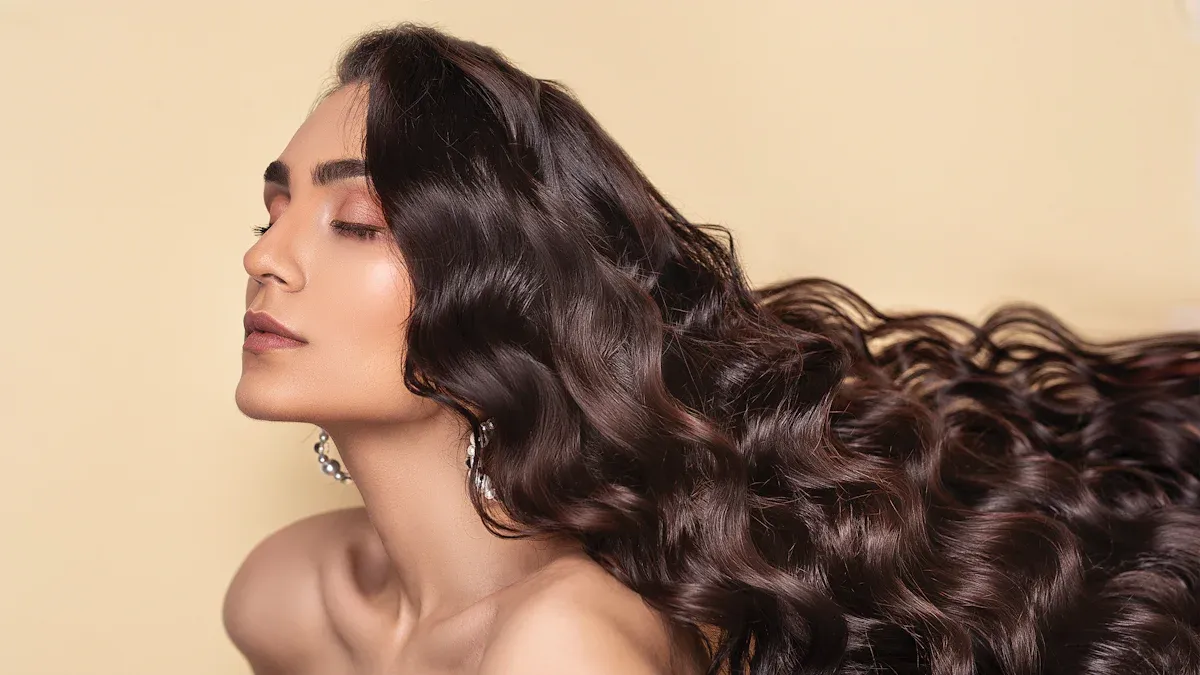
Straight hair is often the most recognized of the four main hair types. It falls flat against the scalp and has a smooth texture. You might notice that straight hair tends to reflect light well, giving it a shiny appearance. In fact, it has the highest sheen among all hair types.
Here are some defining characteristics of straight hair:
Characteristic | Description |
|---|---|
Type | Type 1 (Straight Hair) |
Shine | Reflects the most sheen among all hair types |
Resilience | Known for being resilient and hard to damage |
Sebum Distribution | Easily distributes sebum from scalp to ends, making it the oiliest hair type |
Subtypes | Type 1a (Fine/Thin), Type 1b (Medium), Type 1c (Coarse) |
Did you know that approximately 45% of the global population has straight hair? This makes it the most common hair type worldwide. If you have straight hair, you might find that it requires less maintenance than other types, but it can also get oily quickly.
Wavy hair sits between straight and curly. It has a natural wave pattern that can vary in size and definition. If you have wavy hair, you might enjoy a bit of volume and texture without the tight curls.
Here’s a look at the prevalence of wavy hair among different ethnic groups:
Ethnic Group | Wavy Hair Prevalence |
|---|---|
Hispanic | 34 (34%) |
African | 3 (7%) |
Caucasian | 10 (43%) |
Wavy hair can be both a blessing and a challenge. It often requires specific products to enhance the waves and reduce frizz. You might find that humidity affects your waves, causing them to become more pronounced or frizzy.
Curly hair is known for its unique structure and volume. If you have curly hair, you probably appreciate its bounce and personality. However, curly hair can also be more fragile than straight hair.
Here are some key characteristics of curly hair:
Structure: Curly hair strands occupy more space than straight hair, contributing to increased volume and altering the overall shape.
Fragility: Curly hair is generally more fragile due to uneven cuticle layers, making it more susceptible to damage.
Humidity Sensitivity: Curly hair is more porous and can swell in humid conditions, leading to frizz and loss of shape.
Moisture Retention: The shape of curly hair makes it harder for natural oils to coat each strand, resulting in drier hair compared to straight hair.
Interestingly, over 40% of the world’s population has some degree of curl in their hair, with about 11% having naturally curly hair. If you’re part of this group, you might find that using the right products can help maintain your curls and keep them looking their best.
Coily hair features tightly coiled and zigzag-shaped curls. This hair type often appears as small, densely packed coils. If you have coily hair, you might notice that it has a rich texture and can vary from soft and fine to coarse and wiry.
Here are some unique traits of coily hair:
Coily hair is prone to dryness because natural oils have difficulty traveling along the tight coils, leading to brittleness and breakage.
It experiences significant shrinkage and is more susceptible to tangling and matting.
Common issues include a higher risk of traction alopecia and inflammation.
Did you know that approximately 86% of the world’s population has textured hair? Of those with textured hair, 80% reside in Africa and Asia, making coily hair the most prevalent textured hair type globally. If you have coily hair, embracing its unique characteristics can lead to beautiful styling options.
Understanding your hair texture is just as important as knowing your hair type. Hair texture refers to the thickness or diameter of your hair strands. It can significantly affect how you style and care for your hair. Let’s break down the three main hair textures: fine, medium, and coarse.
If you have fine hair, your strands are delicate and thin. This texture can make your hair feel soft and silky, but it also means it’s more prone to damage. Fine hair often lacks volume, and curls may drop quickly. Here are some key characteristics:
Property | Description |
|---|---|
Keratin Expression | Imbalanced hair keratins and KAPs expressions. |
Cortex Organization | Changes in cortex organization observed in fine hair. |
Hair Shape | Thin hairs have a round shape, correlating with their diameter. |
Medullae Frequency | Reduced frequency of medullae in fine hair. |
Cuticle Layers | A reduced number of cuticle layers in fine hair. |
Rigidity | Increased rigidity in fine hair. |
Viscosity | Decreased viscosity in fine hair. |
Water Diffusion Coefficient | Decreased water diffusion coefficient in fine hair. |
Fine hair can also be oily, as natural oils travel down the strands more easily. To care for fine hair, you might want to use lightweight products. Here are some recommendations:
Nioxin Hair Fall Defense Serum: This product is effective for fine, thinning hair. It reduces shedding and enhances root volume.
Spoiled Child A22 Biotin Boost Hair + Scalp Serum: This serum adds body and texture to fine hair, enhancing overall quality and moisture.
Medium hair strikes a balance between fine and coarse. It has a smooth texture and is less prone to damage compared to fine hair. You’ll find that medium hair holds styles fairly well and feels silky when healthy. Here are some characteristics:
Medium hair typically consists of two layers: the cortex and cuticle.
It has a thicker appearance that adequately covers the scalp.
This texture is less prone to breakage but can still be damaged by high heat styling tools.
When it comes to styling, medium hair is versatile. You can use curl creams and gels for curly styles or lightweight mousses for wavy looks. The porosity of medium hair allows the right amount of moisture to penetrate, making it easier to manage. This level of porosity is often seen as ideal because it requires less maintenance compared to low or high porosity hair.
Coarse hair features thick strands that are easily felt and visible. This texture is often described as wiry or brittle. Coarse hair has a higher level of tolerance to manipulation, making it more resilient to daily styling and chemical treatments. Here are some defining traits:
Coarse hair has a strand diameter of 120 microns, which is nearly double that of fine hair. It consists of three layers: the cortex, cuticle, and medulla, contributing to its strength and fullness.
However, coarse hair can be challenging to manage. Common issues include frizz and dryness. Here are some typical challenges faced by individuals with coarse hair:
Coarse hair is often difficult to manage due to its rough texture.
It can be stubborn, making it hard to control.
You may notice that it tends to be frizzy or dry and rough to the touch.
To care for coarse hair, focus on moisture. Deep conditioners and hydrating products can help maintain its health and manageability.
Understanding the differences between hair textures can help you tailor your haircare routine effectively. Whether your hair is fine, medium, or coarse, knowing its unique characteristics allows you to choose the right products and techniques for optimal care.
Identifying your hair type can feel overwhelming, but it doesn’t have to be! Here are some practical steps to help you figure it out.
Start with clean, product-free hair. Wash your hair without heavy conditioners and let it air-dry. This way, you can observe its natural pattern. Look closely at how your hair falls when it’s wet versus dry. You might notice different curl patterns or textures.
Tip: Take a picture of your hair in different states. This can help you see patterns you might miss in the moment!
Next, feel the texture of a single strand. Is it smooth or rough? Thin or thick? This touch test can give you clues about your hair type. For example, fine hair feels soft and delicate, while coarse hair feels thicker and more robust.
To assess density, part your hair and see how much scalp is visible. If you see a lot of scalp, you likely have fine hair. If not much scalp shows, you probably have medium or coarse hair.
Finally, consider how your hair reacts to different products. Some products may absorb quickly, while others sit on top of your hair. This can indicate your hair’s porosity. If products absorb quickly, you might have high porosity hair. If they sit on top, you may have low porosity hair.
Hair Type | Product Absorption |
|---|---|
Fine | Absorbs quickly |
Medium | Moderate absorption |
Coarse | Sits on top |
By following these steps, you can confidently identify your hair type. This knowledge will help you create a personalized haircare routine that suits your unique needs!
Understanding your hair type and texture is essential for effective hair care. By identifying whether your hair is straight, wavy, curly, or coily, you can tailor your routine to suit your needs. Embrace your unique hair characteristics! This acceptance can boost your confidence and self-esteem.
Here are some benefits of knowing your hair type:
Benefit of Identifying Hair Type and Texture | Explanation |
|---|---|
Personalized Hair Care Strategies | Tailoring hair care based on individual characteristics leads to better outcomes. |
Effective Product Selection | Different hair textures require specific formulations to maintain health. |
Enhanced Styling Potential | Understanding texture helps in choosing flattering hairstyles and techniques. |
Prevention of Damage | Fine hair needs gentler products to avoid damage, while coarse hair can handle more intensive styling. |
When you understand your hair, you can make informed choices that promote health and style. So, take the time to learn about your hair, and enjoy the journey to healthier, happier locks! 🌟
Hair type refers to the natural pattern of your hair, such as straight, wavy, curly, or coily. Hair texture describes the thickness or diameter of individual strands, categorized as fine, medium, or coarse.
Washing frequency varies by hair type. Straight hair may need more frequent washing due to oiliness, while curly and coily hair often benefits from less frequent washing to maintain moisture.
You can’t change your natural hair type or texture, but you can alter its appearance with styling techniques, products, and treatments. Embrace your unique hair characteristics for the best results!
Choose products specifically designed for your hair type. For example, use lightweight products for fine hair and rich, moisturizing products for coarse or curly hair to enhance your natural texture.
To improve hair health, focus on a balanced diet, stay hydrated, and use suitable products. Regular trims and minimizing heat styling can also help maintain your hair’s vitality.

