Many of you love to style your hair with tools like curling irons and blow-dryers. These heat styling tools help create fabulous looks, but they can also cause serious damage. That’s why following some heat styling tips is crucial for protecting your hair from heat damage. Remember, using a heat protectant before styling is essential, as it acts as a shield to protect your hair.
Key Takeaways
Always use a heat protectant before styling. It forms a barrier that reduces heat damage by 10-20%.
Ensure your hair is about 90% dry before using heat tools. This prevents boiling water inside your hair, which can cause split ends.
Choose the right temperature for your hair type. Lower temperatures help maintain hair health and prevent cumulative damage.
Heat Damage Basics
Effects of Heat on Hair
When you style your hair with heat tools, you might not realize the impact on your strands. Heat can lead to significant changes in your hair structure. For instance, temperatures above 140°C (284°F) can cause irreversible damage. This heat alters the protein structure of your hair, primarily keratin, which is essential for strength and elasticity. As a result, your hair may become more porous, making it harder to retain moisture.
Here are some key effects of heat on hair:
Loss of the outer protective layer.
Decreased mechanical strength, increasing the risk of breakage.
Cumulative damage from daily blow-drying.
Recognizing Damage Signs
It’s crucial to recognize the signs of heat damage early. If you notice any of the following, your hair may be suffering:
Visible Signs of Heat Damage |
|---|
Hair looks thinner but the hairline remains intact |
Increased short, broken strands around the crown and sides |
Hair feels rough, straw-like, or frizzy even after conditioning |
Scalp feels dry, tight, or mildly irritated without dandruff |
If you see these signs, consider adjusting your heat styling routine. Remember, using a heat protectant can help shield your hair from damage. By being aware of these effects and signs, you can take steps to keep your hair healthy and beautiful.
Pre-Styling Tips for Protection
Importance of Heat Protectants
Before you even think about reaching for your heat styling tools, you need to grab a heat protectant. This step is non-negotiable if you want to keep your hair healthy. Heat protectants work by forming a barrier that slows down heat transfer to your hair strands. This helps reduce the risk of damage significantly.
Using a heat protectant spray or serum can seal the hair cuticle, which locks in moisture and prevents breakage. Studies show that these products can reduce heat damage by 10-20%. Here are some key ingredients to look for in heat protectant products:
Ingredient | Effect on Heat Damage |
|---|---|
PVP/DMAPA acrylates copolymer | 10-20% less damage |
Quaternium 70 | 10-20% less damage |
Hydrolyzed wheat protein | 10-20% less damage |
Silicone quaterniums | Low thermal conductivity |
Dimethicone | Seals hair cuticle, reduces moisture loss |
When choosing a heat protectant for hair, make sure it suits your hair type and the heat settings of your styling tools. Always apply it before using any heat. This simple step can save your hair from a lot of trouble!
Drying Hair Before Styling
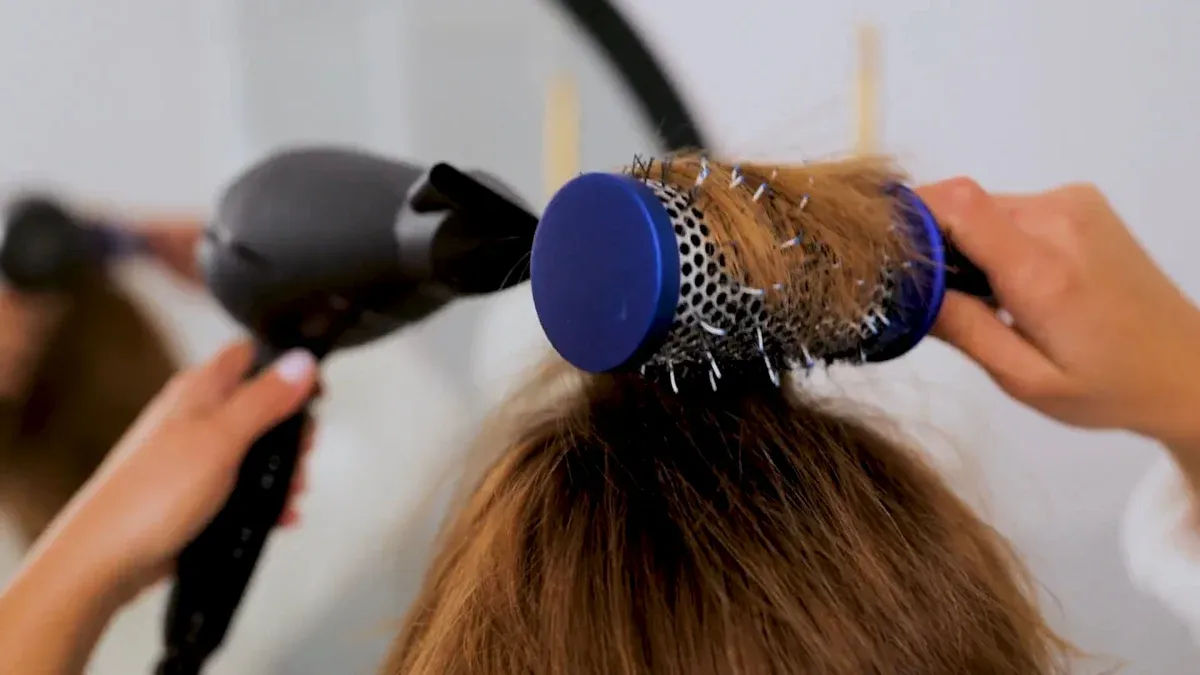
Now, let’s talk about drying your hair before you style it. You might be tempted to use your flat iron or curling wand on damp hair, but that’s a big no-no! Using heat styling tools on wet or damp hair can lead to serious damage. The water inside your hair can boil, causing split ends and a rough texture.
To minimize damage, aim for your hair to be about 90% dry before styling. Here are some tips to help you prepare your hair:
Ensure hair is completely dry before applying heat.
Use a heat protectant consistently.
Choose the lowest effective temperature when styling.
Starting at the lower end of the temperature range for your hair type is wise. Gradually increase the temperature if necessary, and always test the heat on a small section of hair first. This way, you can avoid any unpleasant surprises!
By following these pre-styling tips, you can significantly reduce the risk of heat damage and keep your hair looking fabulous.
Effective Heat Styling Tips
Optimal Temperature Settings
Choosing the right temperature for your heat styling tools is crucial. Using the correct heat setting can help you achieve your desired look while minimizing damage. Different hair types require different temperature ranges. Here’s a quick reference table to guide you:
Hair Type | Optimal Temperature Range (°F) | Optimal Temperature Range (°C) |
|---|---|---|
Fine Hair | 250-340 | 120-170 |
Normal Hair | 300-350 | 150-175 |
Thick Hair | 330-380 | 165-193 |
Coarse Hair | 400-450 | 204-232 |
Using lower temperatures can be beneficial for your hair. Here are some advantages of opting for lower heat settings:
Lower temperatures help in daily maintenance by preventing cumulative damage.
They are beneficial for caring for already damaged hair, preserving its structure.
Gentle styling is possible when you allow time for slower drying, which is less harsh on the hair.
Working in Small Sections
When it comes to heat styling, working in small sections can make a big difference. This technique allows for more even heat distribution, reducing the risk of damage. Here’s why sectioning is so effective:
Working in small, manageable sections helps you apply heat more evenly.
This method reduces the chances of going over the same hair section multiple times, which can lead to damage.
A single, smooth pass with the straightener is often sufficient when you use proper sectioning.
To minimize the number of passes with your heat styling tools, consider these tips:
Apply the minimal amount of heat needed for your desired look.
Avoid holding curls for longer than necessary when using a curling iron.
For straightening, one pass at the right temperature is often sufficient.
Choose tools that heat evenly and glide smoothly to minimize the need for redoing sections.
By following these effective heat styling tips, you can protect your hair from damage while still achieving beautiful styles. Remember, the goal is to look fabulous without compromising the health of your hair!
In summary, protecting your hair from heat damage is essential for maintaining its health and beauty. Remember to use heat protectants, dry your hair properly, and choose the right temperature settings. By following these tips, you can enjoy fabulous styles without compromising your hair’s integrity.
Have you tried any of these techniques? Share your experiences or ask questions in the comments below!
Tip: Gently blot your hair dry instead of rubbing it, and always clean your styling tools to avoid product buildup.
FAQ
What is a heat protectant, and why do I need it?
A heat protectant is a product that shields your hair from heat damage. It helps maintain moisture and prevents breakage during styling.
How often should I use heat styling tools?
Limit heat styling to 2-3 times a week. This helps reduce cumulative damage and keeps your hair healthier in the long run.
Can I style my hair without heat protectants?
You can, but it increases the risk of heat damage. Always use a heat protectant for better protection and healthier hair.