

Hanging a gallery wall, installing a backsplash, or running tile across a kitchen only to find the grout line drifting halfway across the room is the kind of small frustration that lingers. The right laser level turns those guess-and-check projects into clean, repeatable layouts, and the current crop of self-leveling tools makes that easier than ever. This roundup focuses on models that project crisp, hair-thin reference lines across floors, walls, and ceilings, so the only thing you chase is the next square, not a crooked seam.
Your Options, Compared

ludotline 3×360° Self-Leveling Green Laser Level

ludotline 4D 360 Laser Level, 16-Line Green

DEWALT DW088K Cross Line Laser

Huepar W04CG 4×360° Bluetooth Laser Level

CIGMAN 4×360° Laser Level for Tile

ludotline 3×360° Self-Leveling Laser with Tripod
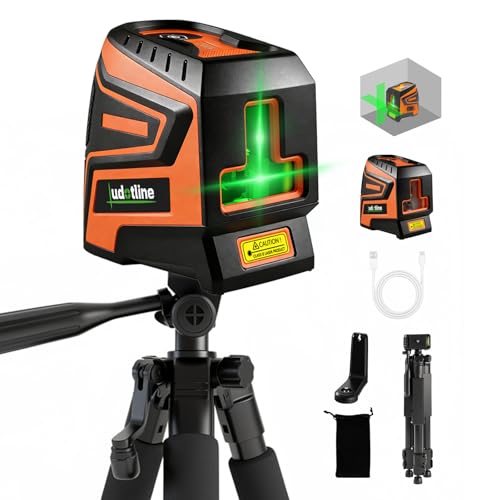
ludotline Laser Level with Tripod

Huepar Pro Rechargeable Cross Line Laser

PLS 180G Cross Line Green Laser

ludotline 360° Self-Leveling Laser Level
Meet The Standout Selections
Three 360° planes turn this into a layout assistant that follows you around the room rather than a single-point tool you keep nudging. The on-body digital display surfaces battery level, operating mode, and brightness status, which spares you the usual squint-and-guess moments when you swap between projects.
Green beams hold visibility better than red in lit interiors, and the one-horizontal, two-vertical combination handles floor, wall, and ceiling reference work without constant repositioning. For whole-room remodels where you need square on every surface, this earns its spot at the top of the bench.
The Good Stuff
- One horizontal and two vertical planes cover floor, wall, and ceiling in a single setup
- Digital display shows battery and mode at a glance
- Green beam stays readable in most lit rooms
- Reduces repositioning during tile, cabinet, and trim work
Things To Consider
- You may find the brightness steps useful mostly in daylight-heavy spaces
- Three-plane output draws power faster than simpler single-line tools
Key Specs
Best Suited To
Remodelers and serious DIYers tackling whole-room layouts where floors, walls, and ceilings all need aligned reference lines.
Look Elsewhere When
Solo renovators who mostly hang shelves and pictures will find the Huepar Pro Rechargeable Cross Line Laser easier to live with day to day.
Step up from the three-plane layout and you land in sixteen-line territory, where every axis gets redundant reference points for fine alignment work. The 4D configuration (four 360° planes) shows its strength during tile grids, chair-rail layouts, and cabinet runs where a single line isn’t enough.
Self-leveling kicks in within the unit’s working range and warns you when the surface is too far off-level, so a tilted tripod never feeds bad geometry into your project. Compared to the first pick, you trade a simpler readout for an extra vertical plane and more line density on every wall.
Points In Its Favor
- Sixteen lines across four 360° planes for dense layouts
- Out-of-level alert when the tripod tilts past the working range
- Green beam keeps visibility up in lit kitchens and basements
- Saves time on multi-line projects like tile and framing
Worth Noting
- Sixteen-line tools can feel like overkill for a single gallery wall
- Out-of-level alerts depend on a stable mount, so a flimsy tripod costs you accuracy
Right Fit For
Tilers and remodelers running dense grids across floors and walls who want every reference line without repositioning.
A Better Fit Elsewhere
The CIGMAN 4×360° Laser Level for Tile handles similar four-plane output but leans harder into flooring workflows specifically.
The DW088K strips laser work down to the essentials: one bright cross line, a self-leveling pendulum, and a housing that shrugs off jobsite abuse. Over-molded rubber edges and a 1-meter drop rating make it the kind of tool you toss in the truck and stop worrying about.
Pair it with a compatible detector (sold separately) and the working range stretches out for longer runs across larger rooms. Red beam visibility is the honest trade-off here. Indoors it’s fine, but bright sunlight or outdoor work pushes you toward a green-beam unit or a detector.
A Few Strong Suits
- Over-molded housing rated to survive 1-meter drops
- Self-leveling cross line for fast layout tasks
- Detector-ready range up to 165 feet with the right accessory
- Compact enough to stage on a shelf or ladder tray
Trade Offs
- Red beam dims faster than green in sunlit spaces
- Detector for long range is a separate purchase
Made For
Contractors and remodelers who need a rugged cross line that survives daily transport between sites.
Skip It When
Outdoor-only projects in bright sun call for the Huepar Pro Rechargeable Cross Line Laser with its pulse mode and green beam instead.
The W04CG is a different class of tool: a motorized rotating base, Bluetooth control from your phone, and a large LCD screen keep you from walking back to the unit for every adjustment. Sixteen green lines across four 360° planes cover floors, walls, and ceilings in one go.
For pros who spend entire days laying out large rooms or commercial spaces, the remote-controlled sweep turns tedious line changes into a tap on the app. The honest read is that this much capability only pays off when your project actually demands it.
Practical Pluses
- Motorized base rotates the laser plane remotely
- Bluetooth app control keeps you off ladders for routine tweaks
- Sixteen green lines span four full 360° planes
- Large LCD screen surfaces current settings clearly
Small Caveats
- Premium feature set means a premium commitment from your wallet
- Extra capability is wasted on a single-picture-hang project
Feature Snapshot
Who It Suits Best
Full-time layout pros and remodelers running multi-room commercial or renovation projects.
Swap It Out When
DIYers will get more value out of the ludotline 4D 360 Laser Level, which delivers the same line count without the motorized base.
The CIGMAN unit projects sixteen green lines across four 360° planes that intersect at right angles, which is exactly what floor and wall tile layouts demand. Instead of snapping chalk lines that fade or blow away, you set the laser and let the planes do the alignment.
Compared to the earlier picks, this model leans into one specific use case, so its real strength shows up when cabinets, shelves, drop ceilings, and tile grids stack up on the same job list. Cabinets and tile both share the same square-reference requirement, and four planes feed both surfaces at once.
Useful Touches
- Four 360° planes deliver horizontal and vertical square references at once
- Bright green lines hold up in well-lit interiors
- Handles tile, cabinet, framing, and electrical layout in one tool
- Reduces chalk-line steps on grid-heavy projects
Points To Keep In Mind
- Most useful when you actually have a grid-heavy project on the bench
- Single-line tasks like hanging one picture underuse what it offers
Perfect Match For
Homeowners running bathroom or kitchen tile projects where square reference lines on the floor and wall matter equally.
Consider Something Else When
Smaller projects that only need one shelf or one cabinet benefit more from the simpler Huepar Pro Rechargeable Cross Line Laser.
Where the first ludotline pick is the brains, this version is the full kit: three 360° green planes plus an adjustable tripod in the box, so unbox-and-go is the actual workflow. The 40mW green module cuts through the usual living-room glare without leaning on a detector.
Two-second settling time means you mount, unlock, and the lines are reference-ready almost before you finish walking to the wall. For weekend remodelers handling tile, cabinets, or shelving where stable tripod height matters, that combo saves real clock time.
Positive Points
- Bundled tripod removes a separate accessory trip
- Two-second self-leveling cuts the wait between setups
- 40mW green beam stays visible in lit interiors
- Twelve-line three-plane layout covers whole-room projects
Factors To Consider
- Tripod adds bulk to store and transport
- Higher-output green module pulls battery faster than simpler red-beam units
Whose Shelf It Belongs On
DIYers juggling multiple weekend projects who want the tripod mount included rather than buying it separately.
Reach For A Different Pick When
People with limited storage may prefer the compact Huepar Pro Rechargeable Cross Line Laser, which skips the tripod entirely.
First-time laser owners tend to want two things: a fast self-leveling cycle and a clear visual line that doesn’t fade the second the sun hits the wall. This model settles in two seconds with about 3mm of accuracy at 10 meters, which is plenty for shelf and trim work.
Switch to manual mode when you need an angled reference, like a staircase handrail or a sloped ceiling line. The included tripod makes first-day setup painless for anyone who has never mounted a laser before, and the green beam extends out to roughly 100 feet, or further with pulse mode.
Noteworthy Benefits
- Two-second self-leveling speeds up first-time setups
- Manual mode unlocks angled references for stairs and slopes
- Green beam visibility out to about 100 feet indoors
- Pulse mode extends working range with a detector
A Few Limitations
- Spec accuracy assumes the tripod itself is stable on flat ground
- Single-line tools require a second pass for square layouts
Quick Facts
Built With In Mind
First-time DIYers stepping into laser layout for shelves, pictures, and small remodel tasks.
Where Another Pick Suits Better
Anyone running whole-room tile grids will outgrow this fast and benefit from the CIGMAN 4×360° Laser Level for Tile instead.
For everyday hanging and shelving tasks, a compact cross line that runs for hours on a single charge earns its keep faster than a multi-plane monster. The rechargeable Huepar Pro pushes about 18 hours of runtime and ships with a hard carrying case plus a magnetic bracket for steel studs and shelves.
Self-leveling, manual, and pulse modes are all onboard, and pulse mode opens up roughly 200 feet of working range with the right receiver. The honest read is that this is the kind of tool you leave in the kitchen drawer and grab any time a picture frame drifts off-center.
Where It Helps
- About 18 hours of runtime per charge for multi-day jobs
- Magnetic bracket mounts to steel studs and metal shelves
- Pulse mode stretches range to roughly 200 feet outdoors
- Hard carrying case keeps the unit protected in transit
Honest Caveats
- Single cross line means manual resets for square layouts
- Pulse mode range assumes a compatible receiver is in your kit
Who Will Love This
Anyone who hangs shelves, frames, or curtain rods regularly and wants a rechargeable grab-and-go tool.
Not Your Match When
Full-room tile projects need the multi-plane coverage of the ludotline 4D 360 Laser Level instead.
Pacific Laser Systems designs for jobsite first and DIY second, and the 180G wears that on its sleeve: a 1-meter drop-tested body, IP54 dust and water protection, and a pendulum lock for safe transport. The cross line covers both level and perpendicular alignment without a separate accessory.
Where the DEWALT DW088K takes a similar rugged-beams approach, this unit trades red for green and adds the IP54 rating for wet or dusty environments. Anyone who has watched a tool get rained on mid-project knows why that spec matters.
A Favorable Mix
- IP54 rating for dust and water resistance on active sites
- 1-meter drop-tested body for rough handling
- Green cross line for level and plumb in one sweep
- Pendulum lock protects the internal mechanism in transit
Possible Compromises
- Single cross line means manual work for full room grids
- Brand sits at a higher price tier than the ludotline options
Made For
Tradespeople working in dusty, damp, or unpredictable environments who need a tool that survives the conditions.
Where A Sibling Pick Shines
DIYers who mostly work indoors get more layout flexibility from the ludotline 3×360° Self-Leveling Green Laser Level.
The final ludotline option in this roundup keeps things simple: three 360° planes and twelve bright green lines at a price that opens up whole-room coverage for homeowners on a tighter budget. You get the same full-room layout footprint without a motorized base or Bluetooth app.
For weekend remodelers planning a single tiling or shelving project, that trade-off lands well. You step past the cross-line tier without paying for pro-grade extras you may never touch, and the bright green beam keeps the lines visible in lit kitchens and basements.
Everyday Perks
- Three 360° planes cover floor, wall, and ceiling in one setup
- Bright green lines hold up in lit interiors
- Accessible entry point for whole-room laser layout
- Twelve lines give square reference points on every surface
Things To Weigh
- No tripod bundled, so you’ll likely buy one separately
- Best value when you actually have multi-surface work to do
Feature Card
Whose Shelf It Belongs On
Budget-minded DIYers planning a single remodel who want full-room coverage without premium-tier extras.
Another Choice May Suit
Anyone who already owns a tripod should compare this against the Ludotline 3×360° Self-Leveling Green Laser Level, which adds a digital readout.
Choosing The Right Laser For Pinpoint Layout Work
Beam color sets the tone of every project. Green beams stay readable in lit rooms and most outdoor morning light, while red beams cost less but fade the second the sun hits a wall. For indoor DIY, green is the safer default; for pure jobsite work with a detector, red still pulls its weight.
Number of planes decides how many layout lines you get per setup. A single cross line works for shelves, pictures, and basic trim. Three 360° planes add ceiling and floor references for remodels. Four 360° planes cover dense tile grids and multi-wall cabinet runs without constant repositioning, which is where models like the CIGMAN and Huepar W04CG earn their price tags.
Working range matters most for outdoor layouts and large rooms. Indoor projects rarely push past 50 feet, so a 100-foot base range covers most of what you face. Outdoor runs and big commercial spaces benefit from pulse mode plus a compatible detector, which can stretch usable reach out to 165 feet or more.
Build quality and accessories round out the decision. IP ratings (the standard that defines how well a sealed enclosure keeps out solids and moisture, where IP54 covers most jobsite dust and light water), drop testing, and pendulum locks protect your investment on rough sites. Bundled tripods, magnetic brackets, and carrying cases shift value depending on whether you already own those accessories.
Key Considerations Across These Picks
Pitfalls Shoppers Hit
Chasing line count over beam quality leaves you with a tool that looks impressive but disappears in daylight. Match the beam color to your real working environment, not the spec sheet. Another common miss is buying a four-plane unit for a single gallery wall, where you never use the extra capability and end up paying for weight you carry around.
Where The Extra Money Goes
Premium tiers add motorized rotation, Bluetooth control, larger displays, and tougher IP-rated housings. Those extras pay off when your projects span multiple rooms or run daily. For weekend use, mid-tier three-plane tools deliver the same layout coverage without the professional feature tax.
Frequently Asked Questions
What accuracy should I look for in a laser level? For most home DIY, 3 mm of accuracy at 10 meters is sufficient for shelves, tile, and trim. Tighter tolerances matter for cabinetry, but the difference rarely shows up in everyday projects.
Are green beams really better than red? Green wavelengths appear brighter to the human eye, so the line stays visible under most room lighting. Red beams still work fine indoors and cost less, but they fade quickly in sunlight or bright workshop conditions.
Do I need a detector for outdoor use? A detector becomes essential outdoors once sunlight washes out the beam. Pulse mode on most modern lasers pairs with a detector to extend usable range well past the naked-eye limit.
How many planes do I really need? One cross line covers pictures and shelves. Three 360° planes handle floor, wall, and ceiling work for room remodels. Four planes feed dense tile grids and multi-wall cabinet runs with fewer repositioning steps.
Are bundled tripods worth it? A bundled tripod saves a trip and guarantees mount compatibility. Anyone who already owns a sturdy tripod can skip the bundle, but first-time owners usually appreciate the all-in-one setup.
Closing Remarks
The right laser level is the one that matches your room, your lighting, and the kind of projects you actually tackle. Start with beam color and plane count, then build up from there with working range, accessories, and build quality. Pick the tool that fits the project in front of you today, and upgrade only when the next one outgrows it.
