

A good fine tooth comb is one of those quiet tools you don’t think about until you need it. The teeth glide through, the part lines up clean, and a beard or fade looks polished instead of patchy. The challenge is that “fine tooth” covers everything from pocket-sized beard combs to full-size salon tools, and they really aren’t interchangeable.
This lineup looks at nine options that span barbershop-grade cutters, teasing combs for lift, saw-cut cellulose acetate combs, and folding pocket picks. Whether you keep one in a grooming kit, stock a salon, or just want something that lasts longer than a drugstore throwaway, there’s a fit here for the way you actually style.
The Lineup, Simplified

Allegro Combs #420 Professional Barber Cutting Comb, Fine & Wide Tooth, 12-Pack
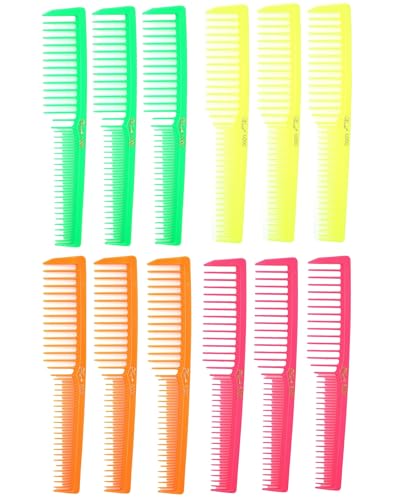
Krest 6000 7 in. Teasing Lift Vent Combs 12-Pack (Neon Mix)

ghd Final Touch, Comb Out & The Sectioner Set

Kent 9T Tortoiseshell Fine and Wide Tooth Dressing Comb

Kent 92T Tortoise Wide Tooth Detangler Comb

Kent 16T Tortoise Fine and Wide Tooth Styling Comb

Kent 82T Handmade Folding Pocket Comb (Graphite)

Kent 87T Handmade Folding Pocket Comb (Tortoiseshell)

Kent 20T Handmade Folding Pocket Comb
Taking A Closer Look At The Options
The Allegro Combs #420 sits in barbershop drawers for a reason. It measures roughly 7 inches long and under a quarter-inch thick, which means it sits comfortably in a palm during clipper-over-comb work without feeling like a ruler. The two-sided layout gives you fine teeth for parting and tight fades on one end, and wider teeth for detangling and sectioning on the other, so you can run a full cut without swapping tools mid-pass.
This set ships as a 12-pack, which is the real reason salons and beauty schools grab it. Single-use backups for the backbar become a non-issue, and home groomers who lose things constantly can stop pretending they won’t. The construction is a nitrile plastic (a flexible, snag-resistant synthetic) that holds up to clipper contact better than cheap molded combs tend to.
A Favorable Mix
- Dual-sided fine and wide teeth cover parting, fading, and detangling in one pass
- 12-pack format keeps backups on hand for busy shops and shared stations
- Lightweight enough for long cutting sessions without hand fatigue
- Nitrile plastic flexes just enough to glide over clipper edges without catching
- Slim profile slides into back pockets for barbers who travel between chairs
Things To Consider
- Plastic feel won’t appeal to anyone used to heavier cellulose acetate combs
- Twelve combs is more than a home user typically needs
Quick Facts
Best Suited To
Barbers, stylists, and beauty school students who need a reliable, no-frills cutting comb that holds up to daily clipper work.
Look Elsewhere When
Anyone wanting a premium hand-finished feel for facial hair grooming will get more out of the Kent 9T Tortoiseshell Fine and Wide Tooth Dressing Comb, which uses saw-cut cellulose acetate for a smoother glide.
The Krest 6000 leans hard into volume work. The “teasing” tooth pattern (closely spaced teeth with a vent channel through the spine) lets you backcomb at the root to build lift without snagging the lengths the way a flat-toothed comb sometimes can. At 7 inches, it’s long enough to manage thicker sections in a single pass, which matters when you’re working on long hair and don’t want to chase the same strand three times.
The 12-pack in a neon mix is honest about its audience. Stylists who want a fresh comb for every client, families who keep losing combs, and dorm rooms that need a budget fix will all find the math here makes sense. Compared to the Allegro #420 above, the Krest is more about lift than cutting precision, so it lives in a different drawer of the styling kit.
Advantages To Know
- Vented spine channel reduces tugging during backcombing
- Multi-pack value suits salons stocking stations and home users replacing constantly
- Seven-inch length reaches through longer hair without repeat passes
Points To Note
- Not designed for clipper-over-comb cutting, so it overlaps rather than replaces a barber comb
- Teasing teeth can stress fine or chemically treated hair if used aggressively on the same spot
- Plastic construction will eventually bend if pressed hard into thick tangles
Whose Shelf It Belongs On
Anyone styling fine or long hair for volume, or salons that go through combs quickly and want a low-cost per-piece option.
Swap It Out When
Cutting and fading work calls for the Allegro Combs #420 Professional Barber Cutting Comb instead, which is built for clipper contact rather than teasing lift.
The ghd set packages three tools into one tidy bundle: a narrow dressing brush, a detangling comb, and a tail comb for clean sections. The narrow dressing brush is the standout because it’s heat-resistant, which means you can run it through hair right after a flat iron or curling pass without the teeth softening the way standard plastic would. The detangling side handles the gentle work, and the tail comb pulls precise parts for updos or balayage sectioning.
For anyone whose styling routine leans heavily on hot tools, this trio covers the awkward gap where a regular comb would melt or catch. Compared to the Kent 16T further down, which is all hand-finished acetate, the ghd leans into a more utilitarian plastic build that prioritizes function over heirloom feel.
Real Benefits
- Heat resistance lets the brush ride alongside flat irons and curling wands
- Three tools in one package covers detangling, sectioning, and finishing
- Tail comb produces clean parts for braids, updos, and color application
Worth Noting
- Multi-piece kit takes up more counter space than a single dress comb
- Lacks the hand-polished feel of saw-cut acetate combs
Made For
Heat-tool users and colorists who need sectioning precision and tools that survive daily contact with warm styling appliances.
A Better Fit Elsewhere
Anyone wanting a single all-purpose comb for daily grooming will get more mileage from the Kent 16T Tortoise Fine and Wide Tooth Styling Comb, which combines fine and wide teeth on one body.
The Kent 9T feels different the moment you pick it up. Cellulose acetate (a plant-derived, non-static plastic) is what gives the comb its soft, almost fabric-like flex, and saw-cutting (slicing the teeth rather than molding them) means each tooth is polished smooth at the tip instead of leaving the rough edges you sometimes feel on cheaper combs. At 7.5 inches, the 9T slips into a back pocket and stays comfortable during beard detailing, mustache shaping, or a quick scalp comb-through before heading out.
This is the comb people keep for years rather than replacing every few months. The trade-off, of course, is that it’s a single comb at a higher cost than the multi-pack plastic options above, so it suits someone who values longevity over volume.
Notable Gains
- Saw-cut teeth glide through hair and facial hair without snagging
- Cellulose acetate reduces static compared to standard plastic combs
- Tortoiseshell finish stays looking sharp in a grooming kit over time
- Two-sided layout handles both fine detailing and wider detangling
Honest Caveats
- Single comb rather than a multi-pack, so it costs more per piece
- Not designed for heat-tool contact during blow-dry or flat-iron work
Key Specs
Right Fit For
Beard and mustache groomers who want a daily comb that feels gentle on skin and lasts through years of pocket carry.
Reach For A Different Pick When
Curly hair detangling calls for the wider tooth spacing of the Kent 92T Tortoise Wide Tooth Detangler Comb, which is built specifically for knots and waves.
The Kent 92T is a wide-tooth detangler, so it lives a slightly different life than the fine-tooth combs elsewhere in this list. It earns its place because anyone with curly or wavy hair knows that aggressive teeth on wet strands lead to breakage. The 7.5-inch body and widely spaced teeth let you work through a knot in sections without dragging the whole curl pattern into a frizz halo.
It’s handmade from the same cellulose acetate as the 9T above, hand polished, and saw-cut for smooth tooth edges. For a full shower-and-style routine, pairing the 92T with a fine-tooth option covers the wet detangle and the finished part in one go.
Useful Touches
- Wide spacing reduces breakage on wet curly and wavy hair
- Smooth saw-cut tips protect the scalp during detangling
- Same handmade acetate build as the rest of the Kent lineup
Points To Keep In Mind
- Wide spacing means it won’t part or section hair as cleanly as a fine-tooth comb
- Not built for teasing or backcombing, so it complements rather than replaces a styling comb
Perfect Match For
Curly and wavy hair routines that need a gentle wet-stage detangler before finer styling tools take over.
Where A Sibling Pick Shines
Fine-tooth finishing and parting work is better handled by the Kent 16T Tortoise Fine and Wide Tooth Styling Comb, which offers a fine side for that final pass.
The Kent 16T is the comb most people picture when they hear “dressing comb.” At 7.2 inches with a fine tooth side and a wider tooth side, it does almost everything the average bathroom needs: parting, finishing after a blowout, running through a beard, or teasing the front of a hairstyle for a bit of lift. The handmade cellulose acetate keeps static down, and the saw-cut, hand-polished teeth don’t drag the way a stamped plastic comb sometimes will.
It lives comfortably in a bathroom drawer, a gym bag, or a travel kit, and unlike the Krest 6000 above, it isn’t optimized for one trick. It just handles most of them well.
Where It Helps
- Two-sided design covers fine finishing and wider detangling in one comb
- Hand-polished teeth glide without snagging on damp or dry hair
- Cellulose acetate build holds up to daily bathroom humidity over time
Room For Improvement
- Slightly shorter than some other Kent combs, which matters for very thick or long hair
- Costs more per piece than multi-pack plastic combs
Feature Snapshot
Who It Suits Best
Anyone wanting one well-made comb for everyday bathroom use, from styling to beard touch-ups to a quick post-shower pass.
Consider Something Else When
Travel and pocket carry is a higher priority than counter-top use, in which case the Kent 82T Handmade Folding Pocket Comb folds down to a much more pocket-friendly footprint.
The 82T opens to a generous 7.87 inches and folds down to 4 inches, which is the rare combination of full-size teeth and pocket-friendly footprint. The graphite finish gives it a darker, more understated look than the tortoiseshell options, and the hinge feels solid enough for daily pocket carry without becoming the floppy weak point cheaper folding combs often develop. The fine teeth are well suited to beard work, mustache shaping, and quick part refreshes between meetings or flights.
Compared to the fixed Kent 16T above, the 82T trades a bit of rigid feel for the convenience of folding away. That’s a worthwhile trade for anyone who carries a comb in a jeans pocket rather than leaving one on a counter.
The Helpful Details
- Folds to roughly half its open size for jeans-pocket carry
- Open length matches full-size dressing combs for proper styling reach
- Hand-polished teeth keep the fine detailing comfortable on facial hair
Some Limits To Know
- Moving hinge adds a small wear point over years of daily folding
- Single tooth density, so it doesn’t cover wide-tooth detangling
Who Should Grab It
Frequent travelers and commuters who want a full-feeling comb that disappears into a pocket or carry-on between uses.
Skip It When
Beard grooming and mustache shaping on a tighter scale is the priority, in which case the smaller Kent 87T Handmade Folding Pocket Comb is a more pocket-tucked alternative.
The 87T is the compact cousin of the 82T. It opens to 4.5 inches and folds down to a trim 2.5 inches, which makes it the most discreet option in the Kent folding line. The tortoiseshell finish is the classic pattern most people associate with the brand, and the fine teeth are well sized for mustache work, beard cleanup along the neckline, and a quick scalp refresh on short hair.
It’s the kind of comb that ends up living in a wallet or a back pocket permanently. For a longer comb with the same folding logic, the 82T above is the natural sibling.
Why It Works Well
- Smallest folded footprint in the lineup, easy to keep on hand
- Tortoiseshell finish gives the classic, polished grooming look
- Smooth saw-cut teeth suit delicate facial hair areas
Possible Compromises
- Open length is shorter than full-size combs, so it covers less ground per pass
- Not ideal for detangling long or thick hair
Built With In Mind
Anyone wanting a discreet facial-hair comb that fits in a back pocket, a wallet pocket, or a small travel kit without bulk.
Not Your Match When
Daily bathroom grooming with longer hair is the priority, where the larger Kent 16T Tortoise Fine and Wide Tooth Styling Comb gives more reach and a two-sided layout.
The 20T rounds out the folding trio at 167mm open and 85mm closed, sitting between the 82T and 87T in size. The fine teeth are hand polished for a soft glide through beards and mustaches, and the cellulose acetate build stays light enough to forget it’s in your pocket. The 20T is the sort of comb people buy once and end up replacing only because they lose it, not because it wore out.
Across the three Kent folding picks, the 20T lands as the middle-ground everyday option: larger than the 87T for more practical reach, smaller than the 82T for easier carry. It suits anyone who wants a single pocket comb for both facial hair and the occasional scalp pass.
Practical Advantages
- Mid-size folded profile balances reach and portability
- Cellulose acetate build reduces static on facial hair
- Hand-polished fine teeth comfortable for sensitive neckline areas
Worth Bearing In Mind
- Single tooth density limits use to fine styling, not detangling thick hair
- No wide-tooth side, so it doesn’t replace a two-sided comb for full routines
The Right Fit
Gentlemen who want a slim, everyday pocket comb for beard and mustache grooming without committing to a full bathroom size.
Where Another Pick Suits Better
Anyone wanting maximum open length for proper styling reach will prefer the Kent 82T Handmade Folding Pocket Comb, which opens to nearly 8 inches.
Choosing Fine Tooth Combs That Actually Fit Your Routine
Tooth spacing is the first thing to think about, and it matters more than the comb’s material. Fine teeth are best for parts, finishing, and short facial hair, while wide teeth handle wet detangling and curly textures without breakage. If you only buy one, a two-sided comb covers both jobs in a single tool. A pocket folder covers carry, and a full-size dressing comb covers the bathroom.
Material changes the experience. Saw-cut cellulose acetate costs more but glides smoother, holds up longer, and reduces static compared to standard molded plastic. Nitrile plastic is the workhorse choice for cutting and clipper work, where flex matters more than polish. For heat styling, a heat-resistant plastic is non-negotiable because regular teeth will soften against a flat iron.
Size and shape should match where the comb actually lives. A 7-inch comb works on a counter and in most back pockets, but travelers and anyone who carries gear in slim pockets will get more use from a 4-inch folder. The trade-off is reach: a smaller open length means more passes through longer hair.
Ergonomics are easy to overlook until you hold a poorly balanced comb. Saw-cut combs tend to feel substantial without being heavy, and the polished tips prevent the tiny scalp scratch that a cheap molded comb leaves behind.
Key Considerations Across These Picks
Common Shopping Slip Ups
The most frequent mistake is buying a multi-pack of plastic combs when one well-made comb would actually last longer and feel better in the hand. Another trap is choosing a comb for the wrong hair stage. Wide-tooth combs are for wet detangling, fine-tooth combs are for finished looks, and using the wrong one in the wrong moment either drags on knots or fails to smooth the part.
A third slip is ignoring tooth finish. Molded teeth often have a faint seam that catches on hair and roughs up the cuticle over time. Saw-cut and hand-polished teeth glide, which matters more on fine or chemically treated hair where breakage builds up quietly.
Where The Extra Money Goes
Higher-tier combs in this category cost more because of the material and the build. Cellulose acetate is more expensive than commodity plastic, saw-cutting is slower than molding, and hand polishing is, by definition, manual. The payoff is a comb that stays smooth over years of pocket carry rather than developing rough edges after a season of use.
For most people, a single mid- to upper-tier comb outlasts several cheap replacements. The upgrade is worth it for daily groomers and anyone with sensitive scalps or facial hair, and it’s less critical for occasional use or shop backbar stocking where cost-per-piece matters more.
Frequently Asked Questions
What Is A Fine Tooth Comb Best Used For?
A fine tooth comb is best used for parting, finishing hairstyles, and grooming short facial hair like beards and mustaches. The closely spaced teeth create clean part lines and smooth flyaways.
Are Fine Tooth Combs Bad For Curly Hair?
Fine tooth combs can cause breakage on curly hair when used on dry strands or pulled through tangles. Wide-tooth combs are gentler for detangling curls, while fine teeth work for finishing once the hair is smooth.
How Often Should You Replace A Comb?
A quality saw-cut or handmade comb can last years with basic care, while a basic plastic comb may need replacing once teeth develop rough edges or the body cracks. Cleaning the comb weekly extends its life regardless of tier.
Can You Use A Fine Tooth Comb On Wet Hair?
Fine tooth combs can be used on wet hair with care, though wide-tooth combs are gentler for detangling. The fine side works well on wet hair for parting and sectioning before styling.
What Is The Difference Between A Barber Comb And A Beard Comb?
A barber comb is typically longer and built for cutting and clipper work, while a beard comb is shorter, often folding, and designed for facial hair detailing. Some combs work for both, but the design priorities differ.
