

Your evening routine shouldn’t collapse under the weight of a bulky panel or a tangle of cords. Affordable red light therapy devices range from wearable face masks to freestanding body panels, with meaningful differences in coverage, wavelengths, controls, and placement. The right choice depends on which areas you want to treat and how much setup your routine can realistically accommodate.
A mask suits facial skincare and travel, while a panel makes more sense for broader body coverage. Voice control, water resistance, and multiple wavelength options can also shape which device earns a permanent place in your home.
A Fast Comparison Of The Options

BestQool 120W Red Light Panel
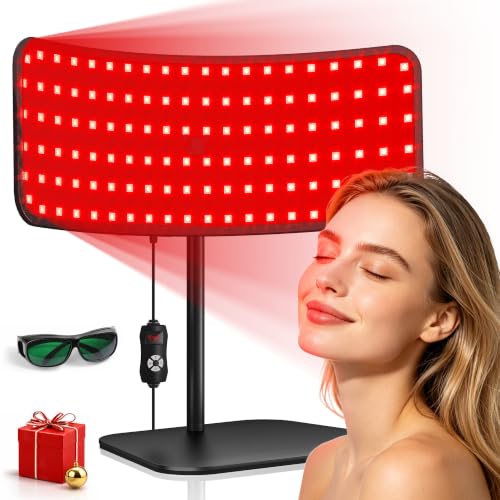
Morfone 660/850/940nm Light Panel

INIA GLOW 4D Wireless Face Mask

INIA 850nm Face, Neck & Chest Mask

YOEYOU 850nm LED Face Mask
INIA 850nm Red/Blue LED Face Mask
A Closer Look At Each Pick
Picture your home-gym routine sharing space with a sauna tent or humid bathroom. The BestQool 120W Red Light Panel is built for those surroundings, with an IPX6 water-resistance rating that covers powerful water jets without implying submersion capability.
Its 120W power rating makes it a body-oriented panel rather than a compact facial accessory. You benefit most from a permanent setup with room to stand, position, and connect the device, especially when voice control would make repeated sessions easier to manage.
Benefits That Matter
- The 120W rating supports broader body-panel positioning than a wearable mask.
- IPX6 water resistance makes the panel more practical around steam, splashes, and humid rooms.
- Voice control can reduce hands-on adjustments during a stationary routine.
- A freestanding panel avoids straps and close facial contact.
Practical Considerations
- A 120W panel needs more placement space than any mask in this roundup.
- Water resistance does not make the panel suitable for submersion, so keep that distinction in mind.
Feature Facts
Built With In Mind
This panel suits home-gym users and sauna or bathroom routines that need broad coverage in a humid setting.
Where Another Pick Suits Better
The Morfone 660/850/940nm Light Panel suits you better when wavelength variety matters more than voice operation.
After the BestQool panel’s voice-first approach, the Morfone 660/850/940nm Light Panel shifts attention toward wavelength choice. Its 120 triple-chip LEDs each combine red at 660nm, near-infrared at 850nm, and 940nm infrared output.
That makes it a practical one-device option for face-and-body routines where you want several lighting bands without moving between separate products. A 10Hz pulse mode provides ten flashes per second, while steady mode suits a slower, less interrupted setup.
What Earns Its Place
- Three wavelengths give you more selection than a single-band facial mask.
- The 120 triple-chip LEDs provide a substantial number of light sources in one panel.
- Face-and-body positioning makes the format useful beyond a skincare-only routine.
- Steady and 10Hz pulse modes support different session preferences.
- The 940nm band adds another coverage depth to the 660nm and 850nm outputs.
Possible Compromises
- Three wavelengths add complexity compared with a two-band mask.
- The panel requires a fixed location and sufficient room to use it comfortably.
- More output options do not make a particular wavelength automatically right for you.
Key Details
Made For
This panel suits dedicated home users who want several wavelengths and both face-and-body positioning.
A Better Fit Elsewhere
The INIA GLOW 4D Wireless Face Mask serves you better when a cordless facial format matters more than wavelength breadth.
Compare the GLOW mask with the Morfone panel and the difference becomes physical rather than technical. You wear this device over your face, while flexible silicone follows the forehead, cheeks, chin, and jawline instead of requiring a fixed standing position.
Its 320 LEDs and dual near-infrared output concentrate the experience on facial coverage. You benefit most from a compact routine that must move between the bedroom, bathroom, and a trip, since the wireless construction removes a tethered power cord from the setup.
Bright Spots
- Flexible silicone follows multiple facial contours for closer positioning.
- Wireless construction simplifies storage and travel.
- The 320-LED arrangement gives the mask considerable light-source density.
- Dual near-infrared channels provide a face-focused alternative to body panels.
Less Ideal Details
- Its face-only format cannot cover the neck, chest, or body like a panel.
- Mask fit can vary with face shape, so check the contour and wearing position before ordering.
Who Will Love This
This mask suits frequent travelers and facial-skincare users who value cordless convenience and a close-fitting format.
Another Choice May Suit
The INIA 850nm Face, Neck & Chest Mask suits you better when one upper-body routine must cover three separate areas.
Where the GLOW mask concentrates on facial contours, this INIA set extends its coverage to the neck and chest. The package combines a face mask with a separate panel, using dedicated LEDs for each of the three upper-body zones.
Its 850nm near-infrared output and four operating modes make it useful for anyone who wants a coordinated routine beyond the face. You benefit most from treating the face, neck, and décolletage as one connected area rather than maintaining separate devices.
Where It Helps
- Dedicated face, neck, and chest panels reduce the need for separate tools.
- The 850nm band supplies consistent near-infrared light across all three areas.
- Four modes let you select a setting that matches your preferred routine.
- The coordinated set simplifies upper-body positioning compared with standalone pieces.
Things To Weigh
- Two physical components require more storage and setup than a single face mask.
- Near-infrared-only output is less varied than the Morfone panel’s three-wavelength setup.
Quick Facts
Right Fit For
This set suits upper-body routines that need dedicated coverage across the face, neck, and chest.
Where A Sibling Pick Shines
The YOEYOU 850nm LED Face Mask suits you better when simplicity and a face-only routine outweigh multi-zone coverage.
Where the previous INIA set spreads across three areas, the YOEYOU 850nm LED Face Mask keeps the setup focused on your face. Red light at 660nm and near-infrared light at 850nm give you two distinct bands without adding another panel to your room.
You benefit most from a concise facial routine and a wearable format that fits naturally into a morning or evening schedule. The honest read is that this pick offers fewer coverage choices than the surrounding multi-zone and three-wavelength options.
Practical Pluses
- The 660nm red band and 850nm near-infrared band provide a straightforward dual-light setup.
- A face-mask format avoids the floor space and positioning required by a body panel.
Small Caveats
- Its coverage stops at the face, with no neck or chest panel included.
- Two wavelengths give you fewer options than the Morfone three-band panel.
- You may prefer a mode selector with more visible choices for different routines.
Best Suited To
This mask suits facial-skincare beginners who want a focused two-wavelength setup without panel-level setup.
Reach For A Different Pick When
The INIA 850nm Red/Blue LED Face Mask suits you better when multiple color and mode options are worth the added complexity.
Compared with the YOEYOU mask’s 660nm and 850nm pairing, this INIA model uses 630nm red light alongside 850nm near-infrared light. The red and blue format adds another color option, while four modes let you adjust how the mask operates.
You benefit most from facial skincare routines that value several selections without moving beyond a single mask. It occupies a practical middle ground between the YOEYOU’s simpler two-band setup and the Morfone panel’s three-wavelength flexibility.
Strengths Worth Knowing
- The 630nm red band offers a distinct option from the YOEYOU mask’s 660nm band.
- Red, blue, and 850nm near-infrared choices provide varied light types in one wearable device.
- Four operating modes make it easier to adjust the routine.
- The face-focused format avoids the extra storage required by a two-piece set.
Factors To Consider
- More colors and modes can make a simple routine feel unnecessarily complicated.
- Its face-only coverage leaves neck and chest routines to another device.
Feature Facts
The Right Fit
This mask suits facial-skincare users who want several colors and modes without choosing a full panel.
Swap It Out When
The Morfone 660/850/940nm Light Panel suits you better when three distinct wavelengths and broader body positioning take priority.
What To Look For Before You Commit
Coverage And Format
Start with the part of your body your routine should cover. A face mask is compact and wearable, while a panel offers adjustable positioning across the face, torso, or other areas. Multi-zone systems sit between those formats, combining a face mask with a separate neck and chest panel.
Wavelength Selection
A wavelength identifies a specific band of light, such as 630nm red or 850nm near-infrared. More wavelengths create additional operating choices, although that variety does not determine which option suits you best. Choose the range that matches the routine you can realistically maintain.
Controls And Convenience
Voice operation can suit a stationary panel because you can make adjustments without touching the device. Wireless construction suits masks that move between rooms or travel. Check the control method against your habits, since an elaborate menu offers little value if you never use it.
Placement And Storage
Panels need a clear position and enough room around them for comfortable use. Masks take less floor space, but separate face, neck, and chest components create more items to store. A humid bathroom also deserves a water-resistance check, with IPX6 appearing on the BestQool panel.
Making The Right Call Without Overcomplicating It
Mistakes Worth Dodging
Don’t choose a panel simply because it looks more substantial, or a mask solely because it appears convenient. The useful comparison is coverage, wavelengths, controls, and the space available in your home. A simpler device that matches your routine is usually easier to use consistently.
When Paying More Pays Off
A higher-tier option can justify added cost when it delivers a feature you need, such as three wavelengths, broader coverage, or a more integrated multi-zone setup. Those extras help only when your routine calls for them, so a well-matched basic option remains a sensible value.
Frequently Asked Questions
Are Face Masks Or Panels Better For Home Use?
A face mask suits facial skincare and compact routines, while a panel gives you more freedom to position the light across different body areas. Choose the format that matches the coverage you actually need.
Does A Higher Wattage Rating Guarantee Better Results?
A higher wattage rating describes power, not a guaranteed outcome. Placement, consistency, device design, and the light bands also matter, so wattage should be considered alongside the other specifications.
What Does 850nm Near-Infrared Mean?
The 850nm label identifies a near-infrared light band. It differs from red wavelengths such as 630nm and 660nm, giving you another kind of light to consider within your routine.
Are Wireless Masks Easier To Move Around?
A wireless mask removes a tethered power cord, which can simplify storage and travel. You still need to account for charging and the space occupied by the mask when it isn’t in use.
Which Option Has Water-Resistance Specifications?
The BestQool 120W Red Light Panel carries an IPX6 rating. That rating supports use around heavy splashes, but you should still follow the product instructions rather than submerging any device.
Final Verdict
Your best match starts with coverage: a mask for focused facial routines, a panel for flexible body positioning, or a multi-zone set for the face, neck, and chest. The Morfone and INIA options add spectrum variety, while the BestQool panel stands out for humid environments and voice operation. Choose the format that fits your space and habits, not simply the longest feature list.
