

Sleeping comfortably after a face lift or facial surgery isn’t just nice to have, it’s part of healing well. The right pillow keeps your head elevated, reduces swelling, and protects incision sites from pressure while you sleep. This guide walks through wedge sets, adjustable systems, and prone face-down designs so you can match your bed setup to the kind of recovery your surgeon has in mind.
A Snapshot Of The Selections

Ahpmeoa 6PCS Wedge Pillow Set for After Surgery, White/Grey
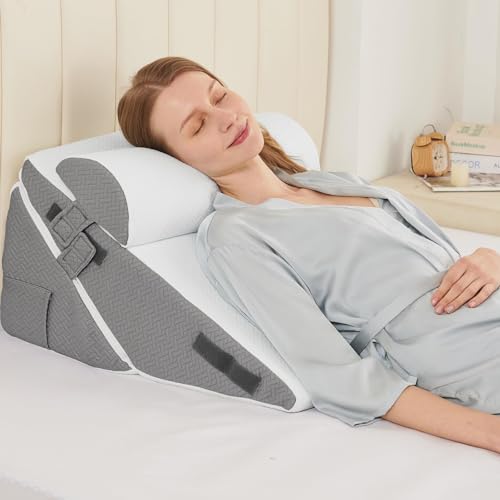
Sasttie Adjustable Wedge Pillow Set for After Surgery, Dark Grey & White

AOSSA Wedge Pillow for Sleeping, 34″ Long Inclined Sleepers Cushion (Blue)
Simpledad Wedge Pillow for Sleeping, 3PCS Orthopedic Bed Wedge Pillow Set

Face Down Pillow Massage Headrest for Bed with Memory Foam (Light Grey)

Fcare Breathe Easy Face Down Pillow, Travel Head Neck Pillow

Face Down Pillow After Eye Surgery, Adjustable Prone Massage Pillow
The Strengths Of Each Pick
The Ahpmeoa 6PCS Wedge Pillow Set is the most modular option in this roundup, breaking recovery sleep into a system of six foam pieces you can rearrange around your body. Instead of a single incline ramp, you get a memory foam back wedge plus smaller bolsters, knee pieces, and head supports that snap into different postures.
Compared to the single-wedge picks later in this article, this set trades simplicity for configuration. That flexibility matters most when your surgeon changes instructions between week one and week three, or when you share the bed with a partner and need to reclaim flat space quickly.
What Stands Out
- Six pieces rearrange into more than sixteen positions, covering sleep, upright reading, and leg elevation
- Memory foam back pillow gives cushioned contour that cradles the spine rather than just tilting it
- Useful beyond facial recovery: knee, leg, and shoulder relief all share the same modular system
- Helps manage acid reflux and GERD by lifting the upper torso at a consistent angle
Points To Note
- Six pieces means more covers to wash and a real storage challenge once you’re back to normal sleep
- Setting the configuration correctly takes a night or two to learn; first-time users may need patience
Key Product Details
Right Fit For
Shoppers who want a single purchase covering back, knee, and head elevation across several weeks of healing.
Where Another Pick Suits Better
The Sasttie Adjustable Wedge Pillow Set is a cleaner choice for those who mainly need a simple back wedge with height adjustment.
The Sasttie Adjustable Wedge Pillow Set swaps the fixed slope of a standard wedge for a system you can raise or lower. Switching between 9-inch and 12-inch heights lets you start recovery with a steep incline for swelling, then ease back down as bruising fades.
Where the Ahpmeoa set leans on six pieces, this one focuses on getting two core pieces right: the main ramp and a detachable bolster that connects via hook-and-loop. Dual-layer foam, a soft 40D top over a denser 25D base, keeps the lift supportive without bottoming out at the shoulders.
A Few Highlights
- Adjustable height between 9 and 12 inches matches the changing swelling and elevation needs of week one versus week three
- Dual-layer foam balances contouring comfort against structural lift, so the wedge keeps its shape
- Detachable neck bolster offers targeted cervical support that snaps on and off
- Doubles as a reading pillow once you no longer need steep elevation
Things To Consider
- Hook-and-loop attachments can wear over time, so the bolster may loosen after repeated reconfiguration
- Only two main components limit whole-body configurations compared to a six-piece set
Whose Shelf It Belongs On
Shoppers who want fine-tuned elevation control without committing to a multi-piece storage project.
Consider Something Else When
The Simpledad 3PCS set fits better for larger-framed sleepers who need extra wedge width across the torso.
The AOSSA Wedge Pillow is built around a 34-inch length and a 30-degree incline, which is meaningfully longer than most travel wedges on the market. That extra length supports the back, lumbar, ribs, and abdomen at once, so you don’t drift down the slope mid-sleep.
Side sleepers recovering from facial work often struggle with shorter wedges that leave the head unsupported, and this R-shaped triangle design addresses that by cradling the upper spine while keeping the torso elevated. It also doubles as a repositioning aid for caregivers turning larger-bodied patients.
Noteworthy Benefits
- 34-inch length cushions back, lumbar, ribs, and abdomen in one continuous slope
- 30-degree angle improves breathing and circulation while reducing spinal pressure
- Useful for side sleepers who usually slide off short wedges during the night
- Functions as a nursing aid for turning and repositioning a heavier sleeper
Worth Noting
- The single 30-degree angle is not adjustable, so it commits you to one elevation throughout recovery
- Bulkier than compact wedges, so it eats up significant bed real estate for couples
Feature Snapshot
Made For
Side sleepers and heavier-framed users who need long, continuous torso support instead of a short ramp.
Look Elsewhere When
The Gwboorsd Face Down Pillow is the better match when prone face-down sleeping is the required position.
The Simpledad Wedge Pillow Set focuses on width as its headline feature: the upgraded design pushes the back wedge to 23.5 inches across, which makes turning easier for larger-bodied users who feel cramped on standard 18-inch ramps.
Three heights within the set give you some of the adjustability that the Sasttie offers, without committing to the full six-piece footprint of the Ahpmeoa. The trade-off shows up in the configuration count: three is enough to handle most recovery weeks but won’t let you build a knee-and-leg setup.
Practical Advantages
- 23.5-inch width fits broader shoulders and reduces the cliff-edge feel of narrow wedges
- Three height options handle most recovery stages without buying extra foam
- Flip design reorients the wedge for back or leg elevation in seconds
- Foam density feels firm enough to support sitting up for meals or reading
A Few Limitations
- Wider footprint may overhang smaller mattresses, so measure your bed width first
- Three pieces offer less modular creativity than the six-piece Ahpmeoa layout
- Cover cleaning can be awkward on flip-style wedges with stitched seams
Best Suited To
Larger-bodied users and broad-shouldered sleepers who slip off narrow wedges during the night.
Skip It When
The COOLBEBE Adjustable Prone Massage Pillow fits better when your surgeon requires face-down sleeping instead of back elevation.
The Gwboorsd Face Down Pillow steps away from back-elevation entirely and instead cradles your face when you need to lie prone. Memory foam forms the core, while a skin-friendly cover keeps pressure off the cheeks, nose, and forehead.
Most of the picks in this roundup, including the Ahpmeoa and Sasttie sets, assume you’ll sleep on your back with elevation. This one handles the opposite instruction, where the surgeon wants zero pressure on healing facial tissue and clear airflow through the center channel.
Positive Takeaways
- Memory foam core holds its shape across long face-down rest sessions
- Centered channel promotes airflow so you can breathe comfortably while prone
- Cradle design spreads pressure across the forehead and cheekbones instead of one spot
- Useful for massage table resting and physical therapy sessions beyond surgery recovery
Trade Offs
- Not designed for side or back sleeping, so it’s a single-purpose piece
- Memory foam can retain warmth in hot bedrooms; cool-room sleepers may find it comfortable, others less so
Quick Facts
Perfect Match For
Recovering patients whose surgeon requires face-down sleeping and who also want a versatile massage headrest.
Reach For A Different Pick When
The Sasttie Adjustable Wedge Pillow Set is the better option when back-elevation, not prone positioning, is the recovery requirement.
The Fcare Breathe Easy Face Down Pillow uses a contoured arch design that keeps your airways open while you rest face-down. Unlike the Gwboorsd pick above, this one targets multiple environments, including desks, airplanes, cars, and post-eye-surgery recovery, so you can keep your routine on the road.
Curved memory foam forms a wide eye-area cradle that gently cushions the face. That wider arch means less cheekbone pressure than a narrower prone pillow, which matters during long flights or extended desk naps.
Notable Gains
- Arched airway channel keeps breathing easy during face-down rest on planes, in cars, or at a desk
- Curved foam cradles the face across a wider area, reducing pinpoint pressure
- Contoured eye-area shape suits post-eye-surgery recovery and prone napping
- Compact enough to pack in a carry-on for travel days
Possible Compromises
- Smaller footprint than full bed wedges, so it’s a supplement rather than a nightly bedroom pillow
- Contour shape takes some adjusting for users used to traditional neck pillows
Who Should Grab It
Frequent travelers and remote workers who need a portable face-down pillow across flights, hotels, and home recovery.
Swap It Out When
The AOSSA Wedge Pillow is a better fit when you primarily need a stationary bedroom wedge for nightly back-elevation sleep.
The COOLBEBE Adjustable Prone Massage Pillow introduces a chest groove that the other prone picks in this roundup don’t offer. The arc-shaped channel lets stomach sleepers and post-eye-surgery patients lie prone without compressing the chest and breast area.
Adjustability sets it apart from the fixed-shape Fcare pillow above: you can tune the height to match your frame and the depth of your massage table or bed. That adjustability also helps during longer recovery, when a flatter profile often feels better than a steep one.
Everyday Advantages
- Arc-shaped chest groove reduces pressure on the chest and breast during prone sessions
- Adjustable height matches a wider range of body types and table thicknesses
- Supports spinal alignment whether you’re recovering from surgery or enjoying a deep-tissue massage
- Useful for stomach sleepers who want pressure relief beyond a standard flat pillow
Details To Watch
- Adjustment mechanisms may loosen with frequent reconfiguration, similar to hook-and-loop wear on other picks
- Larger overall footprint than the Fcare pillow, which makes travel packing less convenient
Built With In Mind
Stomach sleepers and post-eye-surgery patients who want a chest-relief channel along with adjustable height.
A Better Fit Elsewhere
The Gwboorsd Face Down Pillow suits you better when a simpler, firmer memory foam cradle is enough and adjustability isn’t required.
What To Weigh Before Choosing Recovery Pillows
The right pillow after a face lift depends less on a single spec sheet and more on how your surgeon wants you positioned for the first two to three weeks. Back-elevation ramps reduce swelling and are the most common instruction; prone face-down pillows protect facial tissue when zero pressure is the rule. Match the shape of the pillow to the instruction, not the other way around.
Foam quality matters more than cover color. A dual-layer build with a softer top and a denser base holds its slope longer, while a single-density foam compresses at the shoulders and forces you to readjust mid-sleep. Look for memory foam densities in the 25D to 40D range when listings specify them.
Width and length change how the pillow feels in a real bedroom. A 34-inch wedge supports the whole torso; an 18-inch wedge leaves your lower back unsupported and encourages sliding. If you share the bed, measure the open side before committing to a wide 23.5-inch layout.
Adjustability and modularity each have costs. Adjustable hooks let you change elevation but introduce parts that can wear. Six-piece modular sets give you endless configurations but turn into a storage project once recovery ends. Decide which trade-off bothers you less.
Picking Through The Options
Where Shoppers Go Wrong
The biggest slip-up is buying a back-elevation wedge when the surgeon actually wants prone face-down positioning, or vice versa. Read the post-op instructions first, then match the pillow shape to that instruction rather than choosing on appearance.
Another common trap is underestimating bed footprint. A six-piece wedge system or a 34-inch full-torso wedge will crowd a partner out of a queen bed, so measure before ordering. Closet storage is a separate issue: modular foam doesn’t fold flat, and once you’re back to normal sleep, you need somewhere to put six foam blocks.
What Separates Premium From Basic
Higher-priced recovery sets usually earn the difference through dual-density foam, certified materials, and broader modularity. A dual-layer 40D-over-25D build resists bottoming out, while a single-density foam pillow softens within weeks and forces replacement.
Adjustable height systems cost more because of the hardware: hook-and-loop attachments, removable bolsters, or layered foam inserts that snap together. The case for spending up is real when your recovery spans multiple elevation levels; if your surgeon only wants one angle for ten days, a fixed wedge handles the job without the premium.
